
Designated supplier of the world's top 500 smart houses

China Top 10 Small House Manufacturers for Global Buyers

Small houses are gaining attention as buyers seek compact, adaptable space for guest accommodation, rural projects, and urban infill. The opportunity is real, but “small” does not automatically mean affordable, efficient, or easy to ship. Buyers must compare usable floor area, insulation, structural specifications, and delivery scope—not just attractive photos.

The Global Alliance for Buildings and Construction reported that buildings and construction accounted for 34% of global energy demand and 37% of energy- and process-related CO₂ emissions in 2022. That context makes material choices and operational performance worth examining, even for a compact home. McKinsey’s 2019 analysis of modular construction also described potential project savings and shorter schedules, while stressing that outcomes depend on design, production, and execution. Factory production helps. It is not a guarantee.

This guide introduces ten Chinese manufacturers for global buyers, with attention to product range, customization, quality processes, export experience, and after-sales support. These factors can matter as much as the quoted unit price. A carefully finished sample is useful, but buyers should also request technical drawings, material details, inspection records, and a clear shipping specification. Details matter. Country-specific building rules and site conditions still require independent review; supplier claims alone are not enough. Some comparisons remain imperfect, because manufacturers publish different specifications and service boundaries. That is worth admitting. The aim here is to help buyers ask sharper questions before committing to a small house, not to imply that one supplier suits every project.

China Top 10 Small House Manufacturers for Global Buyers

What Defines a Small House Manufacturer in China

A small-house manufacturer in China is more than a workshop assembling compact rooms. It should control or coordinate design, structural engineering, factory production, quality checks, and export packing. Its team should explain wall materials, insulation, wiring routes, lifting points, and the foundation interface in clear drawings. The category is not perfectly tidy: some suppliers build complete homes, while others make modules and rely on partners for installation. Buyers should confirm exactly where the factory’s responsibility ends.

China’s Ministry of Housing and Urban-Rural Development reported that prefabricated buildings covered about 630 million square meters in 2022, or roughly 24.5% of new construction starts. This indicates a substantial domestic production base, but it does not prove that any one factory can deliver a reliable small home. McKinsey’s 2019 report on modular construction found that off-site methods can reduce project timelines by 20–50%, depending on design and execution. Faster production still depends on accurate drawings, material consistency, and controlled assembly. Details matter.

Tips: Request a sample bill of materials, inspection records, and photos of comparable production—not just finished-room images. Ask to see both. Check how the manufacturer protects panels and openings during shipping, and who handles site assembly. A factory tour helps, but it is not proof of consistent quality; verify a recent order from production through packing.

How China’s Small House Manufacturing Industry Is Organized

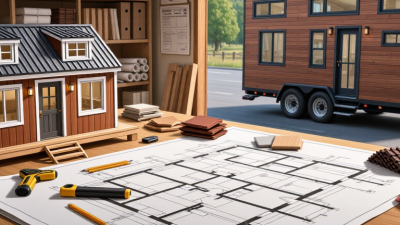
China’s small-house manufacturing industry is organized less like one giant factory system and more like a network of specialized suppliers. A manufacturer may handle structural design and final assembly, while partner workshops provide steel frames, insulation panels, windows, cabinetry, and electrical components. Regional industrial clusters make these parts easier to source and move. Details matter.

Production methods vary. Some factories build a house almost entirely indoors, then transport it in sections. Others ship flat-packed components for assembly at the destination. The choice affects container space, lifting equipment, installation time, and the level of work required on site. A buyer should ask for drawings, material specifications, inspection records, and a clear list of what the quoted price excludes.

Quality control is usually shared across several stages: incoming material checks, frame measurements, fit-out inspections, and a final review before dispatch. But a checklist alone cannot confirm how a house performs after years of damp weather or repeated transport. That gap deserves attention. Suppliers may also differ in how they handle custom layouts, replacement parts, and communication across time zones. Clear written specifications help, though they do not prevent every misunderstanding.

Criteria for Comparing Chinese Small House Manufacturers

Comparing Chinese small house manufacturers takes more than browsing polished catalog photos. Start with measurable evidence. Ask for drawings that show wall build-up, insulation thickness, roof structure, and utility routes. A clear specification helps buyers compare like for like. “Modular” can mean different things between suppliers, so request dimensions and included components in writing.

Review quality controls at each production stage, not only the final inspection. Ask how the factory checks frame alignment, window seals, and water-resistant joints. Request recent inspection records or material certificates, then confirm that they match the proposed model. Verify workshop capacity and lead times against the project size. A large showroom proves little.

Logistics deserve equal attention. Confirm packing methods, loading plans, delivery scope, and who handles installation guidance. Compare quotes line by line: foundations, electrical fittings, plumbing, and on-site work may be excluded. A neat spreadsheet can still mislead. Video calls and sample reviews help, but they cannot replace independent checks when the order is substantial. No score captures everything; a responsive sales contact may not reflect production performance. Keep a written record of open questions, especially where drawings and quotations disagree.

China Top 10 Small House Manufacturers for Global Buyers - Criteria for Comparing Chinese Small House Manufacturers

Use these ten criteria to compare suppliers. Requirements depend on the destination country, project site, and intended use; request project-specific documentation rather than relying on general claims.

No. Comparison criterion What to compare Evidence to request or factual reference
1 Structural design and site loads Confirm design assumptions for wind, snow, seismic activity, and soil conditions at the installation site. Request project-specific structural calculations and identify the design code and load values used. There is no single suitable wind or snow value for every location.
2 Dimensions and usable floor area Compare external dimensions, internal dimensions, ceiling height, and net usable area; check whether quoted area includes walls or covered outdoor space. Request dimensioned plans and packing dimensions. For reference, ISO 668 defines standard freight-container dimensions; a nominal 20-foot container has an external length of about 6.058 m and width of 2.438 m. This is not a universal small-house size.
3 Thermal performance Compare insulation materials and thicknesses, and the stated U-values for walls, roof, floor, windows, and doors. Request calculations or test reports for the complete assemblies. U-value is expressed in W/(m²·K); lower values indicate less heat transfer, but the required performance depends on the local climate and building rules.
4 Fire performance Check the fire performance of the actual wall, roof, floor, insulation, and interior-finish assemblies proposed for the project. Request test reports that identify the tested assembly and applicable test method. EN 13501-1 is a European reaction-to-fire classification standard; its relevance depends on the destination and project requirements.
5 Electrical compatibility Confirm supply voltage and frequency, wiring method, protective devices, outlets, lighting, and compatibility with local electrical rules. Specify the destination-country electrical requirements in the contract and request wiring diagrams and component documentation. 230 V/50 Hz and 120 V/60 Hz are common supply combinations in different markets, but local systems vary.
6 Plumbing and drainage Compare pipe materials, connection sizes, water pressure assumptions, hot-water provision, drainage layout, and freeze protection where needed. Request plumbing drawings and a list of included fixtures. Verify that connections and fittings match local supply, drainage, and sanitation requirements.
7 Certifications and regulatory documentation Check whether certificates apply to the factory, a management system, a specific component, or the complete product—and whether they are accepted in the destination market. Verify certificate scope, validity, issuing body, and covered products. ISO 9001 concerns quality-management systems; it is not, by itself, product approval. CE marking applies to products covered by relevant EU rules and is not blanket approval of an entire house.
8 Factory quality control Compare inspection stages for materials, welding or framing, assembly, finishes, and final testing; check how defects and changes are recorded. Request a sample inspection checklist, material traceability records, inspection photographs, and a written process for nonconforming work and corrective actions.
9 Shipping and delivery scope Compare packed dimensions, gross weight, packaging protection, loading method, included transport stages, and responsibility for customs clearance. Request a packing list and a written delivery quotation stating the named delivery place and applicable Incoterms® 2020 rule. Confirm unloading, inland transport, duties, and taxes separately.
10 Schedule, warranty, and after-sales support Compare production and shipping milestones, warranty duration and exclusions, spare-parts availability, and the process for reporting defects. Request a dated production schedule and a written warranty specifying coverage, remedy, claim procedure, and responsibility for transport or labor. Treat lead times as project-specific and confirm them in the contract.

Note: Product specifications, building-code acceptance, certification scope, and delivery terms should be verified for each project and destination market.

Profiles of 10 Chinese Small House Manufacturers for Global Buyers

China’s small-house suppliers serve different needs, from portable site cabins to insulated family retreats. These ten manufacturer profiles highlight practical differences: light-gauge steel builders suit repeatable layouts; foldable-unit makers prioritize transport; timber specialists offer a warmer interior; and sandwich-panel producers focus on insulation. Other common profiles include modular steel-villa factories, flat-pack exporters, expandable-home makers, rural-cottage workshops, compact energy-efficient builders, and custom hybrid producers. The labels describe manufacturing specialties, not verified company names.

McKinsey’s 2019 report, “Modular construction: From projects to products,” says modular construction can shorten project schedules by 20–50% and reduce costs by up to 20% under suitable conditions. Those figures are not guarantees for every small home. Buyers should compare the actual scope: structural drawings, insulation thickness, window specifications, packing lists, and installation support. Ask for a sample wall section. It reveals more than glossy renderings.

Export experience matters. Check whether the factory can provide clear material specifications, production photos, inspection records, and spare-part plans. A low quotation may exclude foundations, utility connections, or inland transport. One weakness in many supplier comparisons is the focus on floor area alone. A compact unit with poor condensation control may disappoint quickly, even if delivery is fast. Request project references and confirm details directly; paperwork can be incomplete.

Export, Compliance, and Delivery Considerations for Overseas Buyers

For overseas buyers, a small house is not export-ready just because it looks complete in a showroom. Ask for drawings, material specifications, packed dimensions, gross weight, and lifting-point details before comparing quotes. These details affect container loading, port handling, inland transport, and whether the house can reach the site. Details matter.

Compliance depends on the destination and the intended use. Request test reports tied to the exact model and materials, then confirm local requirements for structure, fire performance, insulation, and electrical systems with qualified local professionals. A certificate accepted in one market may not satisfy another. Not always. Agree in writing who supplies the commercial invoice, packing list, and other documents required for clearance; document requirements vary by shipment and destination. If drawings change after testing, ask whether the revised product needs further review.

Delivery planning deserves the same care as product selection. Confirm production milestones, inspection access, packaging protection, loading photos, and responsibility for transport at each handover. Clarify who arranges unloading equipment and what happens if a vessel or site schedule changes. Keep a buffer for customs checks and weather delays. I would not treat a low shipping estimate as reliable until the route, cargo dimensions, and delivery scope are confirmed. Even careful planning leaves some uncertainty.

  • Wechat