
Choosing among the top Spunlace Non Woven Fabric suppliers worldwide takes more than comparing prices or polished product photos. Buyers need to know how a fabric behaves in its intended application. A wipe may need fast liquid uptake and low lint. A medical or personal-care component may require consistent basis weight, strength, and softness. Small differences matter.
Dr. Seshadri Ramkumar is a recognized nonwovens researcher at Texas Tech University. I cannot verify a verbatim quotation from him on supplier selection, so I will not invent one. His research provides a useful expert lens: evaluate nonwovens in relation to their end use, not as generic materials. That distinction helps make supplier comparisons more meaningful.
This guide examines manufacturers and suppliers through practical criteria: product range, process capabilities, quality controls, customization, documentation, and delivery reliability. Ask for specifications and representative samples. Check whether stated properties match the conditions your product will face, including handling and converting. Look closely at batch consistency. It is easy to overlook.
A supplier may offer an attractive sample yet struggle with repeat orders or clear communication. That risk deserves attention. No ranking can replace a technical review tailored to your needs. Use this overview as a starting point, then confirm claims directly with each supplier before making a purchasing decision.
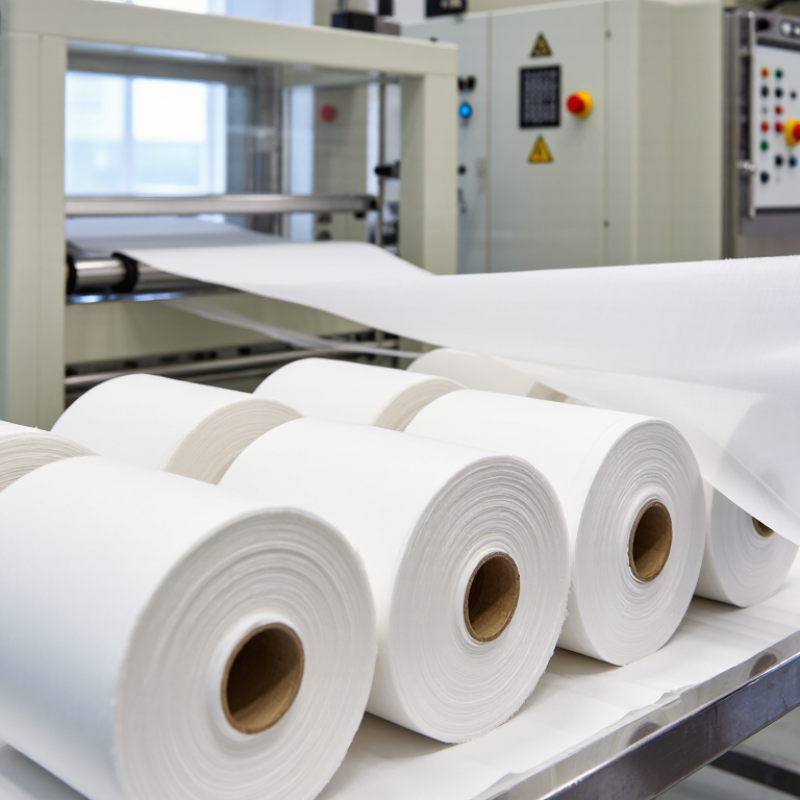
Spunlace nonwoven fabric is made by entangling loose fibers with fine, high-pressure water jets. The process creates a soft, flexible web without relying on thermal bonding. Fiber choice, fabric weight, jet pressure, and finishing affect absorbency, strength, lint, and hand feel. A cotton-rich wipe feels different from a polyester-viscose blend. Small changes matter.
Grand View Research estimated the global spunlace nonwoven market at about US$7.7 billion in 2023 and projected a 7.1% compound annual growth rate from 2024 to 2030. Its market report points to demand across personal care, household wipes, and medical applications. These figures describe market value, not production volume, so they do not show how much fabric each region makes. That distinction is easy to miss.
Global suppliers serve different needs: some focus on high-volume wipes, while others offer lighter webs or custom fiber blends. Buyers often compare basis weight, tensile strength, absorbency, and lint levels using sample rolls and test data. One limitation remains: published market estimates use different product definitions, making direct comparisons imperfect. A sample can reveal more than a sales forecast.
Estimated global market value, 2023–2030 (USD billions)
The market was valued at an estimated USD 7.57 billion in 2023. Forecast values for 2024–2030 are calculated by applying the reported 7.1% compound annual growth rate; they are projections, not observed annual results.
Source: Grand View Research, Spunlace Nonwoven Market Size, Share & Trends Analysis Report, 2024–2030. Forecast-year values calculated from the reported 2023 value and CAGR.
Choosing a spunlace nonwoven supplier starts with the fabric’s intended use. Check basis weight, fiber composition, web width, absorbency, tensile strength, and lint levels against your written specification. Ask for recent test reports and confirm that the tested grade matches the sample offered. A soft handfeel helps, but it proves little about consistency.
Request samples from more than one production lot. Compare them under the same conditions, including wet strength and surface lint after handling. Ask how the supplier controls water-jet pressure, line speed, and raw-material changes; these details can affect fabric uniformity. Review certificates carefully, checking their scope and validity rather than relying on a logo. Traceability matters. You should be able to connect a delivered roll to its production lot and inspection records.
Capacity and communication deserve equal attention. Confirm realistic lead times, minimum order quantities, packaging, and procedures for handling defects. A factory visit or live process review can clarify whether reported controls are used on the production floor. Still, no audit catches everything. A sample can flatter; large runs may reveal variation. Put agreed tolerances and corrective steps in writing, then monitor early shipments before increasing order volume.
Leading spunlace nonwoven fabric suppliers worldwide serve hygiene, personal care, medical, and cleaning markets. Their capabilities can differ widely. Some focus on high-volume rolls, while others offer smaller production runs or customized fiber blends. Buyers should compare process controls, material traceability, and documented test results rather than relying on broad claims. Ask about fiber composition, basis weight, tensile strength, absorbency, and lint levels. A useful supplier can explain how these properties vary between batches. A polished sample is not enough. Request repeat samples and check them under your own converting conditions.
Tips: Share your intended use, target weight, roll width, and performance needs before requesting quotes. Ask for current specifications and a sample from routine production. Confirm how the supplier handles out-of-range test results. Keep the questions specific.
Supplier visits or independent audits can offer useful context, but they do not replace ongoing checks. Review sample records, production capacity, lead times, packaging, and communication practices. A low price may exclude testing or special packing, so compare the full quotation. Regional freight and order size can also affect delivery schedules. No checklist catches everything. Small defects may appear only after converting, and supplier explanations can be incomplete. Build in trial runs and record what changes. That judgment takes practice.
Worldwide supplier comparison framework by product segment. The specifications below describe common market ranges and sourcing considerations, not ranked or company-specific supplier claims.
| Product Segment | Indicative Basis Weight | Common Fiber Content | Typical Applications | Key Supplier Evaluation Points |
|---|---|---|---|---|
| General-purpose wet wipes | Approximately 30–80 gsm | Viscose, polyester, or blends of the two | Personal-care wipes, household wipes, and general cleaning wipes | Confirm sheet strength when wet, absorbency, lotion compatibility, roll or sheet format, and substrate consistency. |
| Heavy-duty cleaning wipes | Approximately 60–120 gsm | Polyester, viscose, or mixed-fiber constructions | Industrial, commercial, and household cleaning tasks | Review abrasion resistance, linting, tensile strength, surface texture, and performance with the intended cleaning solution. |
| Cosmetic and facial-care substrates | Approximately 30–80 gsm | Viscose, polyester, lyocell, or blends, depending on the product specification | Facial cleansing pads, cosmetic wipes, and sheet-mask substrates | Assess softness, drape, absorbency, skin-contact requirements, converting performance, and compatibility with the formulation. |
| Medical and hygiene materials | Approximately 30–100 gsm, depending on construction and use | Viscose, polyester, or blends; fiber choice depends on the required properties | Selected medical and hygiene components, drapes, and wipes | Specify intended use and applicable regulatory requirements. Verify test reports and quality controls; “medical” does not by itself mean sterile. |
| Automotive and interior substrates | Approximately 50–150 gsm | Often polyester or polyester-containing blends | Interior trim, backing layers, and selected surface or cushioning components | Check dimensional stability, abrasion behavior, bonding compatibility, color consistency, and performance under the intended conditions. |
| Specialty and custom spunlace fabrics | Specified to the end use; commonly produced across a broad range | May include polyester, viscose, cotton, lyocell, pulp, or fiber blends | Customized wipes, filtration-related components, and other engineered applications | Request a technical data sheet and samples; define fiber composition, basis-weight tolerance, width, finish, and required performance tests. |
Note: Basis-weight ranges are indicative market ranges, not universal standards. Actual specifications vary by application, fiber blend, bonding process, finishing, and customer requirements. Compare suppliers using current technical data sheets, samples, test methods, production consistency, and applicable certifications.
Comparing spunlace nonwoven suppliers takes more than checking a product sheet. Ask for details on fiber type, basis weight, width, and bonding process. These choices affect softness, absorbency, strength, and linting. A facial wipe and a durable cleaning cloth need different performance. Samples matter. Test them under realistic conditions, including wet handling and repeated use where relevant.
Production capability is just as important. Check minimum order quantities, typical lead times, available roll sizes, and whether the supplier can maintain consistent specifications across repeat orders. Ask how quality checks are recorded. Look for measurements such as basis-weight variation, tensile strength, and absorbency, not only general claims. A neat sample can still hide production variation. One sample is not proof of consistency.
Certifications should match the intended application and the exact product or facility being assessed. Request current documents, confirm their scope, and check whether they cover the relevant material, production site, and testing criteria. Do not assume a certificate applies to every product in a supplier’s catalog. Details count. Comparing suppliers this way takes time, and paperwork can be confusing. It is worth asking for clarification before treating a missing or broad statement as evidence of a capability.
Choosing a Supplier for Different Applications
Spunlace fabric should be selected by its end use, not by price or basis weight alone. For wipes, check absorbency, wet strength, lint, and lotion compatibility. Medical or hygiene applications may need tighter control of cleanliness, fiber shedding, and lot-to-lot consistency. For automotive interiors, abrasion resistance, drape, and color stability can matter more than softness. A supplier should provide relevant test results and explain how production controls support them.
Tips: Request samples from more than one production lot. Compare them after wetting, handling, and drying—not only straight from the package. Ask for test methods, tolerances, and a clear process for addressing out-of-specification batches.
Smithers’ The Future of Global Nonwovens to 2027 forecast the market would reach $68.4 billion by 2027, reflecting expanding demand across varied applications. A market forecast is not proof that a supplier suits your product, though. Ask for application-specific data: basis-weight variation, tensile strength, absorbency, and hydroentanglement details. Confirm whether the supplier can maintain those specifications at your required volume and lead time. I would not assume a polished sample represents routine output; production consistency deserves its own check.