
Designated supplier of the world's top 500 smart houses

Top Soundproof Aluminium Windows for Global Buyers

For global buyers, choosing Soundproof Aluminium Windows is not simply a matter of selecting the thickest glass. It requires careful attention to acoustic ratings, frame design, installation quality, climate, and long-term maintenance. A window may perform well in a laboratory yet disappoint beside a busy road. Small gaps can allow traffic noise, wind, and vibration into an otherwise quiet room.

Dr. Lily Wang, a respected architectural acoustics specialist, has said, “Good acoustical design supports the activities a space is meant to serve.” This principle matters in bedrooms, hotels, offices, hospitals, and urban apartments. A successful window should reduce disturbing frequencies without blocking daylight or weakening ventilation. Look for independently tested sound reduction values, laminated acoustic glass, tightly sealed gaskets, and thermally stable aluminium profiles. Double glazing can help. It is not automatically enough.

Installation deserves equal attention. Poor alignment, unfinished joints, or a weak surrounding wall can undermine an expensive product. That detail is often overlooked. Global buyers should also compare test methods, because acoustic ratings may differ between markets. Product brochures can sound impressive, but verified data is more useful.

This guide examines leading Soundproof Aluminium Windows for international projects. It considers noise control, thermal performance, durability, appearance, customization, certification, and supplier reliability. The “best” window is rarely identical for every building. A coastal hotel may need corrosion resistance, while a city apartment may need stronger low-frequency protection. There is no perfectly silent window. Good design, honest testing, and careful installation come much closer.
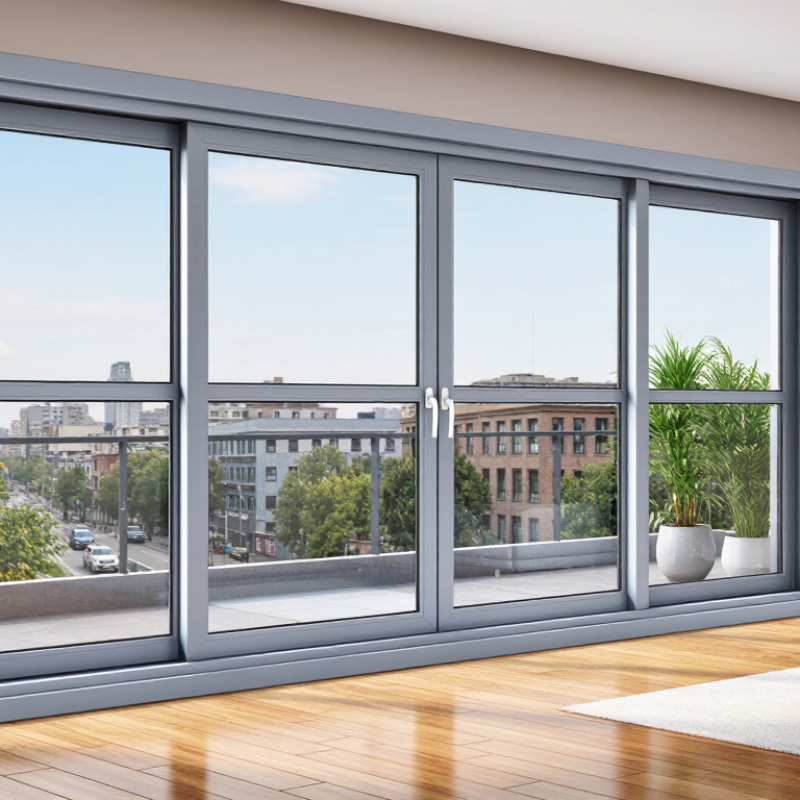
Top Soundproof Aluminium Windows for Global Buyers

What Makes Aluminium Windows Soundproof

Top Soundproof Aluminium Windows for Global Buyers

What Makes Aluminium Windows Soundproof

Soundproof performance comes from the complete window system, not aluminium alone. The frame holds the glass firmly and limits air leakage around the opening. Multi-chamber aluminium profiles can reduce vibration, while continuous gaskets close small but damaging gaps. On site, installation is often the weak point. A narrow seal failure can transmit traffic noise directly indoors.

Glazing usually creates the largest acoustic improvement. Laminated glass contains a resilient interlayer that absorbs different sound frequencies. Unequal glass thicknesses also reduce resonance between panes. A practical specification may combine laminated outer glass, an insulated air space, and a thicker inner pane. Testing under ISO 10140-2 and classification under ISO 717-1 help verify results. However, laboratory Rw values do not perfectly represent a noisy apartment.

The European Environment Agency reported in Environmental Noise in Europe 2020 that about 113 million people faced road traffic noise above 55 dB Lden. The World Health Organization’s 2018 guidelines recommend keeping road traffic noise below 53 dB Lden outdoors. These figures explain why careful acoustic design matters. Yet buyers should question impressive numbers. Window size, wall construction, vents, and fitting quality can reduce real-world performance. The best design may not be the thickest one. It must match the actual noise source, especially low-frequency buses, motorcycles, or aircraft. Even expert specifications need review after installation.

Top Soundproof Aluminium Windows for Global Buyers - What Makes Aluminium Windows Soundproof
Window Configuration Typical Acoustic Rating
Rw, dB
Typical Glazing Build-Up Typical Whole-Window U-Value
Uw, W/m²·K
Recommended Noise Applications Key Soundproofing Features Important Buying Considerations
Single-glazed aluminium window 28–32 dB 4–6 mm monolithic glass 5.0–6.0 Low-noise locations, storage areas and internal partitions Basic weather sealing; limited mass and no insulated air cavity Not normally suitable for bedrooms or buildings near heavy traffic
Standard double-glazed aluminium window 30–34 dB 4 mm glass / 12–16 mm air or gas cavity / 4 mm glass 1.8–2.8 Residential areas with moderate road or neighborhood noise Two glass layers and a sealed cavity improve insulation compared with single glazing Equal glass thicknesses may create less acoustic improvement than an asymmetric build-up
Laminated acoustic double glazing 36–40 dB 6.4–8.8 mm acoustic laminated glass / 12–20 mm cavity / 4–6 mm glass 1.4–2.2 Urban roads, commercial districts and general traffic noise Viscoelastic interlayer helps reduce vibration across a wider frequency range Specify the tested glass composition; laminated glass thickness alone does not guarantee a rating
Asymmetric double glazing 38–43 dB 6–10 mm glass / 16–24 mm cavity / 4–6.4 mm laminated or monolithic glass 1.3–2.1 Busy streets, rail corridors and moderately high external noise Different glass thicknesses reduce resonance overlap and improve frequency coverage Spacer width, cavity gas, frame seals and installation quality strongly affect results
Standard triple-glazed aluminium window 33–38 dB 4 mm glass / 12–16 mm cavity / 4 mm glass / 12–16 mm cavity / 4 mm glass 0.7–1.2 Projects prioritizing energy efficiency with moderate acoustic requirements Three panes improve thermal performance and can increase acoustic insulation when properly designed Triple glazing is not automatically more soundproof than a well-designed asymmetric double unit
High-performance acoustic triple glazing 42–48 dB Acoustic laminated outer or inner pane / asymmetric intermediate pane arrangement / two sealed cavities 0.7–1.3 High-traffic roads, airports and rail or industrial environments Combines asymmetric pane thicknesses, laminated glass, optimized cavities and multi-point seals Request a complete tested window assembly rather than relying only on glass data
Secondary-glazed aluminium system 40–50 dB Existing window plus a separate 4–10 mm pane with a large sealed air gap, typically 50–150 mm 1.2–2.5 Renovation projects, heritage façades and severe external traffic noise Large separation between glazing layers can reduce airborne sound transmission effectively Requires sufficient reveal depth, careful perimeter sealing and compatibility with the existing window
Technical note: The acoustic values shown are indicative ranges for complete window assemblies, not guaranteed glass-only values. Actual performance depends on frame depth, thermally broken aluminium profiles, gasket design, opening type, hardware compression, wall construction and installation quality. Acoustic ratings are commonly reported as Rw in accordance with EN ISO 10140 and EN ISO 717-1; thermal performance is generally evaluated as Uw under EN ISO 10077-1. For international projects, buyers should request project-specific laboratory test reports and installation details.

Key Features of High-Performance Soundproof Window Systems

Top Soundproof Aluminium Windows for Global Buyers

High-performance soundproof window systems combine carefully matched components, not just thick glass. Laminated acoustic glass helps reduce traffic noise, voices, and low-frequency vibrations. Multi-chamber aluminium frames add stability without excessive weight. Deep frame sections can also improve the sealing line.

Compression seals matter greatly. A tiny gap around the sash can weaken an otherwise excellent window. Skilled installers check corners, drainage paths, and wall connections during fitting. In busy urban projects, I have seen a well-rated window perform poorly because foam gaps remained behind the frame.

Hardware should pull the sash evenly against the seals. Multi-point locking supports this pressure along the full perimeter. Some systems use two glass layers with different thicknesses. This can interrupt sound waves more effectively than identical panes. Triple glazing may improve comfort, but it is not automatically quieter. Weight, frame design, and installation still control the result.

Look for independently tested acoustic ratings, such as Rw or STC values. Ask whether the test covered the complete window, rather than glass alone. Results can change with wall construction, room size, and surrounding openings. A realistic specification should identify the tested glass build-up, frame type, and installation method. Perfection is unlikely. Even a strong system cannot block every vibration from structure-borne noise.

How to Compare Sound Reduction Ratings and Glass Options

Top Soundproof Aluminium Windows for Global Buyers

When comparing soundproof aluminium windows, start with tested sound reduction ratings. Look for Rw, STC, or OITC values, depending on your market. These ratings are not interchangeable. Rw commonly supports European specifications, while STC is widely used in North America. OITC can better reflect aircraft, road, and rail noise. A higher number usually indicates stronger laboratory performance. Real rooms are messier. Wall construction, gaps, and installation quality can reduce the result.

Glass selection often matters more than frame appearance. Laminated acoustic glass uses a sound-damping interlayer to reduce speech and traffic noise. Double glazing performs better when the panes have different thicknesses and a wider airspace. Triple glazing may improve insulation, but it does not automatically provide the best acoustic result. Aluminium frames should include continuous seals, accurate drainage, and reinforced corners. Poor fitting can leave a narrow gap around the sash. That gap can defeat expensive glass.

Tips: Ask for the complete tested window-system report, not only the glass rating. Check the testing standard and frequency range. Compare similar sizes and opening types. For busy streets, consider OITC data and laminated outer glass. Request installation details, including perimeter sealing. I would also inspect a sample corner before ordering. Small defects are easy to miss. A rating may look impressive, yet the chosen opening style can weaken everyday comfort.

Frame Design, Sealing Methods, and Thermal Performance

Top Soundproof Aluminium Windows for Global Buyers

Frame Design, Sealing Methods, and Thermal Performance

A high-performing aluminium window begins with its frame geometry. Thermally broken profiles separate the exterior shell from the interior section, reducing conductive heat transfer. The U.S. Department of Energy reports that windows can cause 25–30% of household heating and cooling energy use. Frame depth, glazing cavity, and reinforcement therefore deserve careful comparison, not just visual inspection.

Sealing controls both noise and temperature. Look for continuous EPDM or silicone gaskets, welded or mechanically sealed corners, and multi-point locking systems. These details limit air leakage around the sash, where street noise often enters. Laboratory sound ratings should follow ISO 10140 or ASTM E90 methods, with results reported through recognized acoustic classifications. A higher rating helps, but installation gaps can weaken performance sharply. Real buildings are messier.

Thermal data should include U-factor, solar heat gain coefficient, and air-leakage performance. The National Fenestration Rating Council identifies these metrics as essential for comparing window assemblies. Low-emissivity glass and argon-filled cavities can improve insulation, while selective coatings may reduce summer heat gain. However, darker glass is not automatically better. Climate, orientation, and shading must be assessed together. One overlooked issue is condensation: a warm-edge spacer and properly drained frame can protect the interior reveal. Small details matter. Manufacturers should provide tested values, installation tolerances, and regional compliance evidence rather than broad claims.

Choosing the Right Supplier for Global Installation Needs

Top Soundproof Aluminium Windows for Global Buyers

Choosing a supplier matters as much as choosing the window system. A strong supplier understands different climates, wall structures, and installation practices. Ask for independently verified acoustic test reports, not only product claims. The report should identify glass thickness, frame design, seals, and test conditions. Request full drawings, hardware details, thermal data, and maintenance instructions before ordering. Small omissions can create expensive site delays.

Tips: Send accurate opening sizes, wall sections, and project photos. Request a physical corner sample when possible. Check packing methods for long-distance transport. Confirm replacement parts, installation training, and response times in writing. A supplier should explain tolerances clearly. Vague answers are warning signs. References from similar international projects also provide useful evidence, especially when installation conditions were difficult.

Do not judge performance by glass alone. Acoustic results depend on sealing, frame connections, surrounding walls, and installer accuracy. A supplier offering supervised installation support may reduce practical risks. Still, no supplier can promise silence in every building. That expectation needs checking. I have seen well-tested windows perform poorly after rushed fitting and uneven masonry. A reliable partner will discuss these limitations openly, suggest a site survey, and recommend a realistic specification rather than the most expensive option. Availability of local technical support can matter more than a slightly lower quotation. Cost is only one part.

  • Wechat