
China is a major sourcing destination for fishing equipment, but choosing a supplier takes more than comparing prices. A polished catalog does not reveal how consistently a factory checks hooks, rod guides, reels, or packaging. Buyers should look for clear product specifications, responsive communication, sample availability, and realistic production timelines. Small details matter. A reel handle that feels loose in a sample may point to questions worth asking before a larger order.
This guide explores top fishing tackle suppliers in China and the practical signs that help distinguish dependable partners from less suitable options. It considers product range, manufacturing capabilities, quality-control practices, customization, and export experience. These factors can help buyers assess FISHING TACKLES for different markets and budgets, without assuming that one supplier fits every business. Supplier information and product lines can change, so treat any shortlist as a starting point. Request current specifications, confirm materials and order terms directly, and compare samples where possible. No ranking stays perfect. Even a careful review has limits, especially when public information is incomplete or difficult to verify. The aim here is to offer a grounded overview, not a guarantee; thoughtful checks still belong to the buyer.
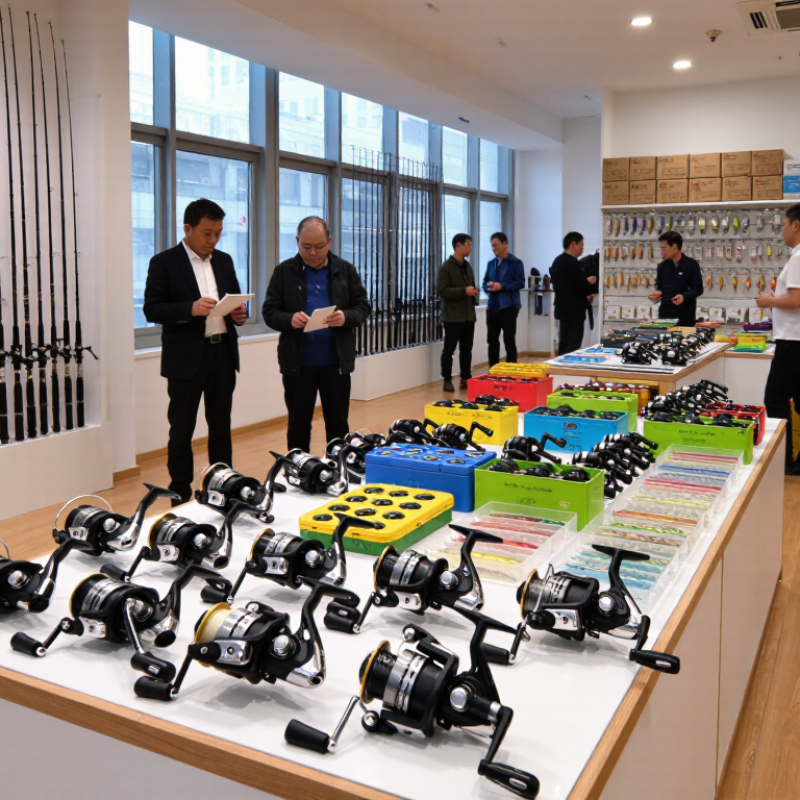
To compare Chinese fishing-tackle suppliers, start with product scope rather than a broad “top supplier” claim. The World Customs Organization’s HS 2022 nomenclature classifies fishing rods under 9507.10 and fishing reels under 9507.30. Code 9507.90 covers other goods within heading 9507. A useful starting point. These codes help screen trade records, but they do not certify product quality or reveal a factory’s entire catalogue.
FAO’s The State of World Fisheries and Aquaculture 2024 reports 223.2 million tonnes of global fisheries and aquaculture production in 2022, including aquatic animals and algae. This provides industry context, not fishing-tackle sales data. For supplier screening, UN Comtrade records can help compare China’s reported export values and quantities by HS code and destination. Treat broad code-level trends cautiously: they cannot identify individual manufacturers or distinguish every product specification.
Ask rod suppliers about blank material, joint fit, and action consistency. For reels, compare gear ratios, drag performance, and corrosion testing. For 9507.90 products, request a precise item list; the category is broad. That split is useful, though imperfect. Classification can shift with product details and reporting practices, so confirm the applicable code with a customs professional before making sourcing decisions.
China’s fishing tackle market includes suppliers focused on rods, reels, lines, lures, and hooks. Some factories make complete product ranges, while others specialize in one category. Rod buyers should compare blank material, action, guide alignment, and handle finish. For reels, inspect drag smoothness, gear play, and corrosion-resistant components. Line suppliers should provide consistent diameter and breaking-strength test data. Lure makers can be assessed by paint durability, balance, and hook attachment. Small details matter.
A supplier map should show capabilities, not just product photos. Ask whether production is in-house or subcontracted, and request samples from the same process used for bulk orders. Check tolerances, packaging, lead times, and quality records. A neat catalog is not proof of consistent production. I have seen specification sheets leave out details buyers later needed; that is worth admitting. Verify claims independently where possible.
Tips: Test samples under realistic conditions, including wet handling and repeated casting. Compare measurements against written specifications. Keep one approved sample for later checks. If an answer about materials or testing feels vague, ask for evidence before placing a large order.
China’s fishing rod suppliers offer blanks across 24T–40T carbon ranges, but tonnage alone does not predict performance. Lower-modulus carbon can suit durable, cost-conscious rods, while higher-modulus material may help create a lighter, stiffer blank. Resin, fiber layout, wall thickness, and reinforcement also matter. The number on a specification sheet is only part of the story.
Compare rods at the same length, power, and action. A longer rod can improve casting reach, yet feel awkward around trees or from a small boat. Power describes resistance under load, but suppliers may use different rating systems. Ask for recommended line and lure weights. Action affects where the blank bends: a fast tip can support precise presentations, while a moderate bend may cushion sudden runs. Feel the difference.
Request samples and check finished weight, joint fit, guide alignment, and recovery after a controlled load. Ask suppliers how they verify carbon grades and keep production consistent between batches. A 40T label is not a quality guarantee. Nor is a lower grade automatically inferior. Compare test records and use the rod for its intended fishing conditions; a tidy chart cannot replace that check.
When comparing fishing reel suppliers in China, request gear ratio, maximum drag in kilograms, and bearing count in the same specification sheet. The 2024 Special Report on Fishing, produced by the Recreational Boating & Fishing Foundation and the American Sportfishing Association, estimates that 57.7 million Americans fished in 2023. That broad participation figure signals a substantial market, but it does not prove any reel’s performance.
A 6.2:1 ratio retrieves line faster than a 5.2:1 ratio, assuming similar spool size. Yet faster is not always better; steady cranking can matter more when retrieving a heavy lure. Ask how maximum drag was measured, and whether the figure applies with a full spool. A quoted peak may not reflect smooth, sustained pressure. Get a sample reel and test the drag with a scale.
Bearing count is useful, but it is not a quality score. Ask for bearing placement, material, sealing, and corrosion-test details. Three well-protected bearings may outlast a larger count with poor protection. Small detail. Big difference. Supplier sheets can still be incomplete, so verify figures on the same reel model and record any test conditions.
Use these representative reel configurations as a practical benchmark when comparing China-based OEM/ODM suppliers. Specifications are typical market ranges, not claims about any particular supplier or product.
| Reel Configuration | Typical Gear Ratio | Typical Max Drag (kg) | Typical Bearing Count | Common Application | What to Verify with the Supplier |
|---|---|---|---|---|---|
| Light spinning reel (1000–2000 size) | 5.0:1–6.2:1 | 3–5 kg | 4+1–9+1 | Light freshwater fishing and finesse presentations | Confirm drag performance under sustained load, spool material, and bearing placement. |
| General-purpose spinning reel (2500–3000 size) | 5.0:1–6.2:1 | 5–10 kg | 5+1–10+1 | Versatile freshwater use and light inshore fishing | Request the exact SKU specification sheet and test method used for the stated max drag. |
| Medium/heavy spinning reel (4000–5000 size) | 4.7:1–6.2:1 | 8–15 kg | 5+1–11+1 | Heavier freshwater tackle and inshore applications | Check gear material, handle and rotor rigidity, and whether the drag rating is measured at the spool. |
| Large spinning reel (6000–8000 size) | 4.6:1–6.2:1 | 10–20 kg | 5+1–11+1 | Surf, shore, and heavier saltwater fishing | Verify corrosion-protection details, sealing design, and drag consistency across repeated runs. |
| Low-profile baitcasting reel | 6.3:1–8.1:1 | 5–10 kg | 5+1–11+1 | Freshwater casting and lure fishing | Ask for braking-system options, spool tolerances, and bearing specifications—not only the total count. |
| Conventional/trolling reel | 3.8:1–6.2:1 | 8–20 kg | 4+1–10+1 | Boat fishing, trolling, and heavier line classes | Confirm usable line capacity, frame strength, drag material, and the intended line class. |
Bearing notation such as “7+1” commonly indicates seven ball bearings plus one anti-reverse roller bearing; conventions can differ, so request a component breakdown. Gear ratio, max drag, and bearing count vary by model and should be confirmed against the exact production SKU and sample.
Rank Suppliers by ISO 9001, MOQ, Lead Time, and Export Records
A useful supplier ranking starts with evidence, not polished catalogues. Give ISO 9001 verification the highest weight: request the current certificate, check its scope, and confirm the issuing body. A certificate may cover only certain operations, so do not assume it applies to every product. Then compare minimum order quantities (MOQs) against your actual trial and production needs. The lowest MOQ is not always the best value.
Next, compare written lead times for samples, production, and repeat orders. Ask whether the quoted schedule includes inspection and packing. Rank export experience by reviewing redacted shipping records, destination markets, and references where available. These checks help distinguish regular export activity from general claims. You could score each category from one to five, while keeping the documents behind every score. A neat spreadsheet can still miss an important detail.
Tips: Request the same product specification and order quantity from every supplier. This makes quotes easier to compare. Check whether payment terms, packaging, and delivery dates are stated clearly. Details matter. One weakness in this approach: records may be limited by confidentiality, so treat missing evidence as “unverified,” not automatic proof of poor performance.