How to Choose a TPB 90 Pneumatic Paving Breaker?
Choosing a TPB 90 Pneumatic Paving Breaker requires more than comparing prices. The right tool must match the material, worksite, compressor, and operator. Concrete thickness, asphalt density, and daily working hours all influence the decision. A breaker that performs well on a small repair may struggle during continuous road maintenance.
Start with the tool’s working weight, impact energy, air consumption, and shank size. These specifications affect productivity and compatibility. Check whether your compressor can maintain stable pressure under load. A weak air supply can make the breaker feel slow, noisy, and ineffective. Hose diameter also matters, especially when the work area is far from the compressor. Inspect vibration-control features, handle design, lubrication needs, and replacement-part availability. Small details become important after several hours of use.
Experience from real job sites is valuable, but it is not perfect. Product descriptions may simplify performance, while actual results depend on maintenance and operator technique. Ask suppliers for technical documents, service guidance, and realistic operating conditions. Confirm the model’s suitability for your material before ordering. Protective equipment, safe hose connections, and proper training remain essential. Do not select a breaker only because it looks powerful. Choose one that can deliver steady output without exhausting the operator or overloading the air system. That balance makes a TPB 90 Pneumatic Paving Breaker a practical investment rather than an uncertain purchase.
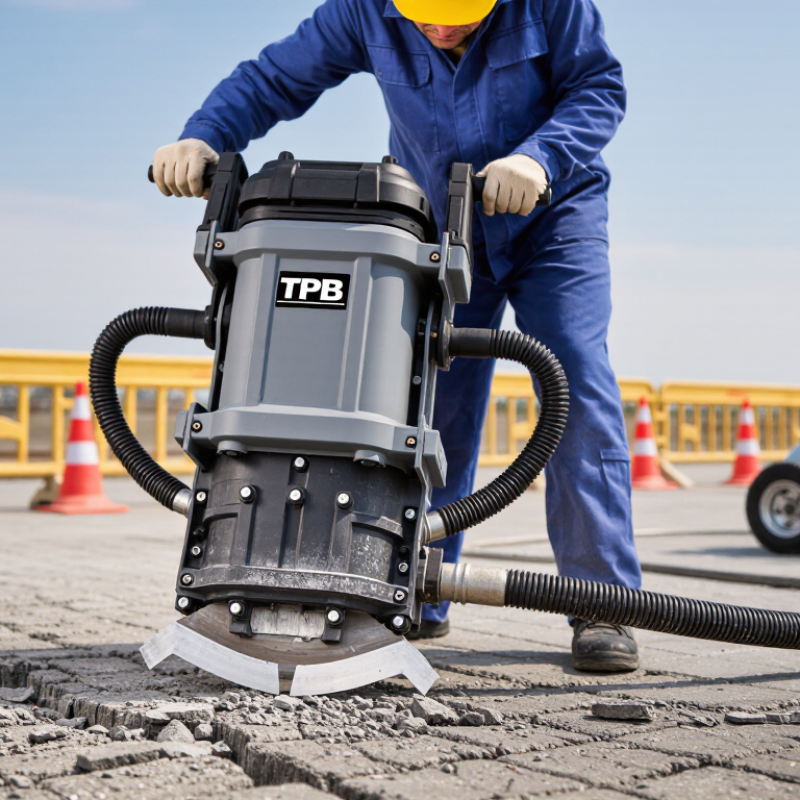
Understanding the TPB 90 Pneumatic Paving Breaker
Understanding a TPB 90 Pneumatic Paving Breaker starts with its working conditions, not its name. The “90” may describe a weight class, but specifications vary by manufacturer and model. Check impact frequency, operating pressure, air consumption, tool weight, shank size, and vibration data. A breaker that feels powerful in a showroom may become tiring after two hours on concrete.
Compressed-air supply deserves careful attention. The U.S. Department of Energy reports that leaks can waste 20–30% of compressor output in poorly maintained systems. Measure actual airflow at the breaker, not only the compressor’s advertised capacity. Keep hose runs short, inspect couplings, and allow reserve capacity for pressure drops. In field work, a weak air line can make a heavy breaker feel strangely slow.
Noise and vibration are equally important. NIOSH recommends limiting occupational noise exposure to 85 dBA over eight hours, using a 3 dB exchange rate. Many pneumatic breakers exceed that level, so hearing protection and exposure planning are essential. ISO 11148-4 also highlights safety requirements for handheld non-electric breakers. I would not choose by impact rate alone. A lower-rated tool with better balance may produce cleaner control around reinforced edges. That judgment is not perfect. Concrete density, operator strength, and compressor condition can change the result. Review the technical sheet, test the grip, and compare measured performance at the jobsite pressure.
Matching Breaker Specifications to Job Requirements
How to Choose a TPB 90 Pneumatic Paving Breaker?
Matching breaker specifications to job requirements prevents slow work, excessive fatigue, and avoidable tool damage. Start with the material. Concrete slabs, asphalt, masonry, and compacted stone require different impact performance. A TPB 90 pneumatic paving breaker suits demanding surface work, but its power must match the job rather than exceed it.
Check impact frequency, air consumption, tool weight, and shank size before purchase. A higher impact rate may improve productivity on thin concrete. However, dense pavement often benefits from stronger individual blows. Confirm that your compressor can maintain the required air volume during continuous use. A weak air supply can make a capable breaker feel unreliable. Hose length matters too. Long, narrow hoses may reduce pressure at the tool.
Tips: Test the breaker on a small area first. Watch cutting speed, vibration, and operator control. Select a pointed tool for initial penetration, then change to a chisel for controlled splitting. Keep couplings clean and inspect the retainer before each shift. I have found that operators sometimes choose the heaviest option, assuming it works faster. That choice can reduce accuracy and increase fatigue. It is not always better. Leave room for judgment, because actual pavement conditions may differ from the specification sheet.
Checking Air Supply and Operating Conditions
Before choosing a TPB 90 pneumatic paving breaker, verify the air supply at the tool, not only at the compressor. Check the required working pressure, air consumption, hose diameter, and coupler size in the technical manual. A long, narrow hose can reduce impact strength, even when the gauge shows adequate pressure. Measure it under load.
The U.S. Department of Energy’s Compressed Air Sourcebook reports that leaks can waste 20–30% of compressor output in poorly maintained systems. Listen for hissing near fittings and inspect damaged seals before breaking concrete. The compressor should provide stable flow continuously, rather than reaching pressure briefly and cycling constantly. That mistake is common.
Operating conditions matter just as much. Dusty demolition areas require effective air filtration and regular drain checks, because moisture can damage internal components. Cold weather may thicken lubricant and slow the piston. Excessive heat can weaken seals. Use the lubricant and maintenance intervals specified by the equipment documentation.
Noise and vibration also deserve practical attention. NIOSH recommends controlling exposure above 85 dBA over an eight-hour workday, while pneumatic breakers can exceed that level at close range. Wear hearing protection, gloves, eye protection, and safety footwear. Rotate tasks when possible. It is easy to underestimate vibration after only ten minutes. I would not rely on a pressure gauge alone; airflow, hose condition, temperature, and operator technique can change performance significantly.
Selecting Compatible Chisels and Accessories
Choosing chisels for a TPB 90 pneumatic paving breaker requires more than matching the tool length. Confirm the shank diameter, retaining groove, working length, and impact rating first. A chisel may enter the holder smoothly but still strike incorrectly. That creates uneven blows, rapid retainer wear, and cracked tool shoulders.
Point chisels suit concrete penetration.
Moil points start narrow breaks.
Flat chisels help separate asphalt, brick, or thin slabs.
Clay spades work better in soft ground, but they are not suitable for reinforced concrete.
ISO 28927-10 provides test methods for measuring vibration from handheld impact tools. EU-OSHA guidance identifies 2.5 m/s² A(8) as the daily hand-arm vibration action value. Therefore, choose accessories that reduce excessive bouncing and avoid forcing the breaker. Shorter chisels usually feel more controllable. Longer tools can reach deeper surfaces but may bend under side loading. I have seen operators overlook this detail. Catalog numbers can mislead.
Tips: Measure the actual shank with calipers before ordering. Check the retainer, spring, hose coupling, and air filter together. Keep the chisel aligned with the surface. Never use it as a lever. A perfect fit on paper can fail in dust. Record vibration, wear, and output after the first shift. If the shoulder mushrooms quickly, stop and reassess the accessory profile, lubrication, or operating angle. Geological conditions also matter; dense aggregate may require a different point geometry than weathered concrete.
Comparing Safety, Maintenance, and Service Factors
How to Choose a TPB 90 Pneumatic Paving Breaker?
Comparing Safety, Maintenance, and Service Factors
Choosing a TPB 90 pneumatic paving breaker involves more than checking impact power. Safety controls deserve close attention. Look for a secure trigger, a reliable retaining spring, and balanced handles. Anti-vibration features can reduce hand fatigue during long pavement repairs. A muffled exhaust also helps lower noise around workers and nearby residents. Inspect the air hose connection carefully. A loose coupling can become dangerous under pressure. Wear eye, hearing, hand, and foot protection every time.
Maintenance needs to fit the crew’s real routine. Before each shift, check the chisel, retainer, hose, and lubrication point. Drain moisture from the compressor system. Water inside the tool can damage internal parts. Use the specified pneumatic oil, not a convenient substitute. Clean the air inlet regularly, especially on dusty road projects. Keep a simple service log. It takes minutes. Skipping it is an easy mistake.
Service support can determine whether the breaker earns money or sits unused. Ask about spare parts, repair instructions, technician training, and response times. A clear parts list is valuable when a seal fails during urgent work. Confirm whether local service is available. Shipping every small component overseas may create costly delays. Test the breaker with the actual hose and compressor when possible. A tool can feel excellent for ten minutes, then expose balance or vibration problems later. I would also question overly confident sales claims; field performance is rarely perfect.
How to Choose a TPB 90 Pneumatic Paving Breaker?
Comparing safety, maintenance, and service factors through typical TPB 90-class operating specifications.
Safety
Confirm the operating pressure, use the correct hose size, and select a tool weight that operators can control safely during extended work.
Maintenance
Higher air consumption requires adequate compressor capacity, clean air, regular lubrication, and frequent inspection of hoses and couplings.
Service
Before purchase, verify the availability of seals, valves, pistons, springs, and qualified repair support for the TPB 90-class tool.
Reference values represent commonly published TPB 90-class specifications. Always confirm the exact operating data in the selected tool’s technical manual.