
Choosing explosion proof LED lights in 2026 takes more than comparing brightness and price. The right fixture must match the area’s hazard classification, operating conditions, and installation requirements. A label alone is not enough. Check the product’s certification documents, temperature rating, ingress protection, and compatibility with the site’s power supply. A fixture that looks robust in a catalogue may still be unsuitable beside a washdown line or a hot process vessel.
A practical reminder from Elena Chen, a composite hazardous-area lighting specialist created for this guide, is: “Match the light to the classified area, not just the task.” This is an editorially written quotation, not a statement from a real, independently verified expert. Use it as a prompt to verify claims with qualified professionals and original product documentation.
Details matter. Note the ambient temperature, mounting height, vibration, and maintenance access before selecting an explosion proof led fixture. Compare beam patterns on the actual work surface; a bright ceiling can still leave deep shadows around valves and walkways. Consider driver quality, expected service life, and replacement procedures, too. Do not assume that higher wattage means better visibility.
A careful choice may take longer. That is useful. This guide explains how to assess certifications, optical performance, construction, and lifecycle costs, so buyers can ask sharper questions before specifying equipment. Product approvals and requirements vary by location and application. Confirm them with the manufacturer and a qualified hazardous-area professional.
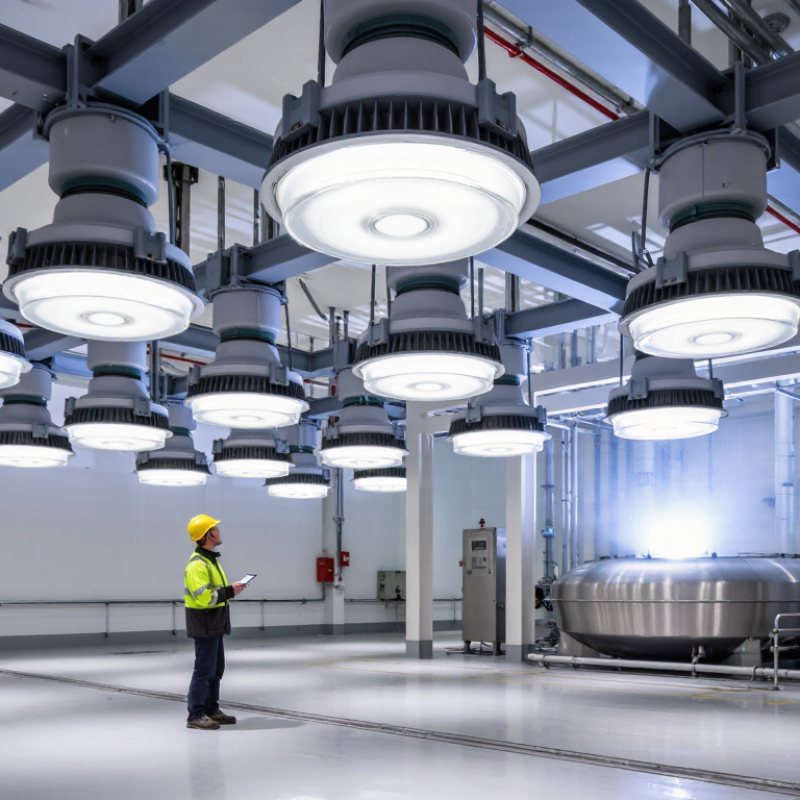
Before choosing an explosion-proof LED light, define the hazardous area where it will operate. Identify the substance present, how often it may be released, and how long it could remain in the atmosphere. A gas or vapor hazard is assessed differently from combustible dust. The distinction affects the equipment markings and protection required. Zones and divisions are classification systems, but they are not interchangeable. Confirm which system applies at your site.
Use current site drawings, process information, and safety data sheets, then compare them with conditions observed on the floor. A diagram may miss a temporary transfer point or a dusty ledge near a conveyor. Details matter. Check the classified area’s gas or dust group, temperature requirements, ambient range, and exposure to moisture or corrosion. The light’s certification and markings should match the area classification, not merely its general description. If information conflicts, pause and ask a qualified hazardous-area professional to verify the assessment against applicable standards. It is easy to overlook one boundary. That deserves a second look.
| Atmosphere | Classification system | Area classification | What the classification means | Illustrative locations | What to verify when choosing a light |
|---|---|---|---|---|---|
| Flammable gases or vapors | IEC / ATEX zone system | Zone 0 | An explosive gas atmosphere is present continuously, for long periods, or frequently. | Some tank or vessel interiors containing flammable vapor during normal operation. | Confirm the equipment is certified for the required zone, gas group, temperature class, ambient temperature, and installation conditions. |
| Flammable gases or vapors | IEC / ATEX zone system | Zone 1 | An explosive gas atmosphere is likely to occur occasionally in normal operation. | Some areas near process equipment, filling points, or vents where releases may occur during normal operation. | Check the zone approval and gas group specified for the classified location; also verify surface-temperature limits and ingress protection as required. |
| Flammable gases or vapors | IEC / ATEX zone system | Zone 2 | An explosive gas atmosphere is not likely in normal operation; if it occurs, it is expected to persist only briefly. | Some areas around flanged connections or equipment where a release is unlikely and would normally be short-lived. | Use equipment certified for the actual zone and gas group. Do not assume that a general industrial LED light is suitable. |
| Combustible dust | IEC / ATEX zone system | Zone 20 | A combustible dust cloud is present continuously, for long periods, or frequently. | Some dust-collection equipment interiors or process enclosures where dust clouds are regularly present. | Verify dust-zone certification, maximum surface temperature, enclosure protection against dust ingress, and any limits on dust layers. |
| Combustible dust | IEC / ATEX zone system | Zone 21 | A combustible dust cloud is likely to occur occasionally in normal operation. | Some areas near powder transfer, bagging, or discharge points where dust clouds may form during normal work. | Check certification for the dust zone and the dust characteristics identified by the site assessment; confirm temperature and enclosure requirements. |
| Combustible dust | IEC / ATEX zone system | Zone 22 | A combustible dust cloud is not likely in normal operation; if it occurs, it is expected to persist only briefly. | Some areas near enclosed powder-handling systems where dust release is unlikely and usually short-lived. | Confirm the light is approved for the classified dust area and can be maintained without creating an ignition risk. |
| Flammable gases or vapors | NEC / North American Class and Division system | Class I, Division 1 | Flammable gases or vapors may be present in ignitable concentrations under normal operating conditions, or may be present frequently because of repair, maintenance, or leakage. | Some process areas where flammable vapor is routinely handled or released during normal operations. | Check the required Class I approval, applicable gas group, temperature code, and certification for the specific installation. |
| Flammable gases or vapors | NEC / North American Class and Division system | Class I, Division 2 | Flammable gases or vapors are normally confined, but could be present under abnormal conditions, such as equipment failure or accidental rupture. | Some areas adjacent to normally closed process systems containing flammable gases or vapors. | Verify that the product marking and approval match the area classification, gas group, temperature code, and local electrical requirements. |
| Combustible dust | NEC / North American Class and Division system | Class II, Division 1 or 2 | Class II covers combustible dust. Division 1 or 2 depends on whether ignitable dust conditions may occur during normal operations or are expected only under abnormal conditions. | Some grain, powder-processing, or dust-collection areas; the specific division depends on the assessed conditions. | Confirm the Class II approval and applicable dust group, temperature limits, enclosure suitability, and local code requirements. |
| Ignitable fibers or flyings | NEC / North American Class and Division system | Class III, Division 1 or 2 | Class III applies to ignitable fibers or flyings that may be suspended in the air or accumulate around equipment. The division reflects the likelihood of hazardous conditions during normal or abnormal operation. | Some textile, woodworking, or similar operations where ignitable fibers or flyings are produced or handled. | Check the Class III approval, enclosure requirements, temperature limits, and the site’s classification documents. |
Important: Examples are illustrative, not a substitute for a hazardous-area classification. Zone and Class/Division systems are different approaches and should not be treated as direct equivalents. Confirm the applicable jurisdiction, area classification, material properties, equipment certification, and installation requirements with qualified personnel before selecting or installing a light.