China Top 10 Smart Parking System Manufacturers
Choosing among China’s leading parking technology suppliers takes more than comparing product pages. A Smart Parking System may combine space sensors, cameras, payment tools, guidance displays, and management software. Each component must work reliably in real operating conditions. A sensor that misses an occupied bay can confuse drivers. A display that updates slowly can create a queue at the entrance. Small failures matter.
This guide to China’s top 10 Smart Parking System manufacturers offers a practical starting point for buyers, developers, and parking operators. It considers product scope, integration options, deployment experience, technical support, and the clarity of published information. These are useful signals, not guarantees. A supplier’s strongest project may not match every site, and public claims can be difficult to verify. Ask for project references, system demonstrations, service terms, and details about data handling before making a decision.
Parking scholar Donald Shoup wrote, “Minimum parking requirements are a fertility drug for cars.” His observation concerns parking policy, but it also reminds us that technology alone cannot solve every parking problem. Better visibility can reduce unnecessary searching. It cannot create spaces where none exist. This distinction is easy to overlook. The manufacturers profiled here vary in scale, specialization, and evidence available to buyers. Some comparisons will remain imperfect. Use the list to shape questions, then assess each supplier against your site’s layout, traffic patterns, budget, and operating needs.
What Defines a Smart Parking System Manufacturer?
A smart parking system manufacturer does more than sell sensors or display boards. It combines detection hardware, software, communications, and operating support into a system that works at a specific site. A covered garage, an outdoor curb, and a mixed-use lot create different detection challenges. A capable manufacturer asks about layout, traffic flow, power access, and the needs of drivers and operators before recommending equipment.
Its expertise shows in practical details: how sensors detect vehicles, how often occupancy data updates, and what happens when a connection fails. Look for clear documentation on sensor limits, installation requirements, software updates, data access, and support response times. Ask how the system handles a blocked sensor or an unexpectedly full level. A polished dashboard is not proof of reliable field performance. That matters.
Tips: Request a site-specific demonstration using realistic parking conditions. Check whether displayed availability matches a manual count across several spaces. Ask for references from comparable installations, not just attractive screenshots. Small details count. No checklist catches every curbside surprise, and even careful planning can miss local quirks. A trustworthy manufacturer should explain those limits plainly and describe how issues are investigated.
Core Technologies Behind Smart Parking Systems
Smart parking systems depend on more than a screen showing empty spaces. They combine cameras, ultrasonic sensors, or magnetic detectors to estimate whether each bay is occupied. A sensor mounted above a space may detect a vehicle’s outline, while a ground-level unit measures changes in the surrounding magnetic field. Each method has limits. Rain, shadows, unusual vehicle shapes, or a poorly placed device can produce inaccurate readings.
Reliable systems compare incoming signals with time-stamped records and update space availability across signs and mobile interfaces. Edge computing can process camera images near the parking area, reducing delays and limiting the amount of raw video sent elsewhere. Not every site needs the same setup. A compact garage may work well with bay sensors, while a busy facility may need cameras and lane counters together. The details matter.
The control platform also needs stable networking, clear data rules, and careful maintenance. If a sensor’s battery weakens, its reading may appear plausible rather than obviously broken. That is easy to miss. Technicians can check devices against direct observations, review repeated errors, and recalibrate equipment after layout changes. Good guidance depends on trustworthy data, not just attractive displays. Even a small mismatch between the sign and the actual space can frustrate drivers and slow traffic.
How to Evaluate Smart Parking System Manufacturers in China
When evaluating smart parking system manufacturers in China, look beyond a polished presentation. Ask how cameras, ground sensors, payment terminals, and management software work together in a real car park. A useful demonstration should show a vehicle entering, a space being detected, and occupancy data updating without manual correction. Small details matter.
Request test results from sites with conditions similar to yours, including dim garages, glare, rain, and crowded entrances. Ask how detection accuracy is measured and what happens when a device loses network access. Check whether the platform offers documented interfaces for linking with existing access-control or property systems. A smooth showroom demo is not proof; limited traffic can hide delays and missed readings.
Evaluate installation and support as carefully as the equipment. Confirm who handles commissioning, staff training, software updates, and replacement parts, and ask for clear response times. Speak with comparable customers, then run a pilot before committing to a large deployment. There is no perfect scorecard. I would also leave room for a less comfortable question: which functions still require manual work? That answer can reveal more than a feature list.
China’s Top 10 Smart Parking System Manufacturers
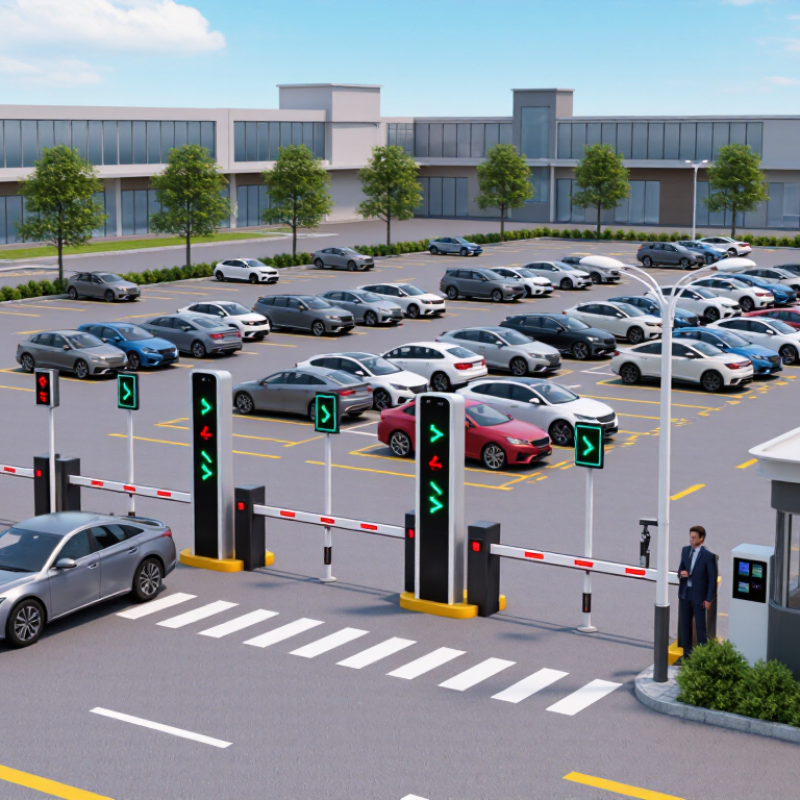
China’s top ten smart parking system manufacturers serve projects ranging from compact office garages to busy public facilities. Their solutions may combine license-plate cameras, ultrasonic space sensors, entry barriers, and a central management platform. The components must work together. A clear dashboard should show occupied spaces, equipment faults, and entry activity without forcing staff to switch between screens. In a real garage, a camera’s performance in rain or glare can matter more than a polished product brochure.
Comparing manufacturers calls for practical evidence, not just feature lists. Ask for test results, installation references, response times for technical support, and details about software updates. Check whether the system can connect with existing payment tools and parking guidance signs. Small details matter. A sensor that misses one vehicle can confuse drivers and attendants during a busy evening. Factory capability is useful, but local installation experience also counts. Specifications can look reassuring; actual site conditions are less tidy. Even a strong shortlist should leave room for questions about maintenance, data handling, and what happens when a network connection drops.
Key Applications and Selection Considerations
Smart parking systems serve busy streets, hospitals, campuses, shopping centers, and airports. They can guide drivers to open spaces, monitor loading zones, and help operators adjust pricing or staffing. The INRIX Parking Pain study reported that U.S. drivers spent an average of 17 hours per year searching for parking. That 2017 figure is not a current universal benchmark, but it shows why reducing search time matters.
Selection should start with the site, not the dashboard. Underground garages may need different sensors from open-air lots exposed to rain, dust, and direct sun. Check detection accuracy, response time, network coverage, and how the system handles a space that is incorrectly marked available. Small errors frustrate drivers quickly. Still, no sensor is perfect.
Also assess integration with payment, access control, and existing guidance signs. Ask for measured uptime and accuracy under real site conditions, not only demonstration results. The U.S. National Institute of Standards and Technology’s guidance on IoT cybersecurity highlights the importance of secure configuration and ongoing updates; connected parking equipment needs the same attention. Consider data retention, user privacy, maintenance access, and the full cost of installation and support. A cheap sensor can become expensive when replacement requires closing a busy lane. The overlooked detail is often the maintenance plan.
China Smart Parking Systems: Key Applications & Selection Considerations
Core functions commonly relevant to each application. A value of 1 indicates relevance; this is a functional mapping, not market-share or deployment data.
Selection considerations: Check site coverage and detection accuracy, integration with existing parking and payment systems, connectivity reliability, privacy and data security, maintenance needs, and lifecycle cost.