
Designated supplier of the world's top 500 smart houses

10 Cat Tree Buying Tips for Global Buyers

Choosing the right Cat Tree is more complex than comparing height, color, and price. Global buyers must consider cat behavior, product safety, material quality, shipping conditions, and local customer expectations. A tall tower may look attractive online, yet it can become unstable on a smooth floor. A compact model may save freight costs, but offer little room for larger cats. These details matter.

In practice, inspect the base thickness, platform spacing, scratching rope, fabric stitching, and connector strength. Pressing each platform by hand can reveal movement that product photos hide. Check whether the manufacturer provides dimensions, weight limits, assembly instructions, and consistent material descriptions. Recycled boards, natural sisal, and soft fabrics may perform differently in humid or dry climates. Packaging also deserves attention. Broken corners and missing screws create avoidable returns.

Reliable buying decisions should combine supplier experience, sample testing, verified customer feedback, and clear technical documents. Buyers should also review applicable safety and labeling requirements in their target markets. No single Cat Tree suits every household or country. That is the difficult part. Even careful testing cannot predict every cat’s habits. Some cats ignore a luxurious tower and sleep inside the carton. Still, a structured evaluation reduces risk and supports better purchasing decisions. The following ten tips will help global buyers compare designs realistically, communicate with suppliers clearly, and select products that balance comfort, durability, safety, and commercial value.
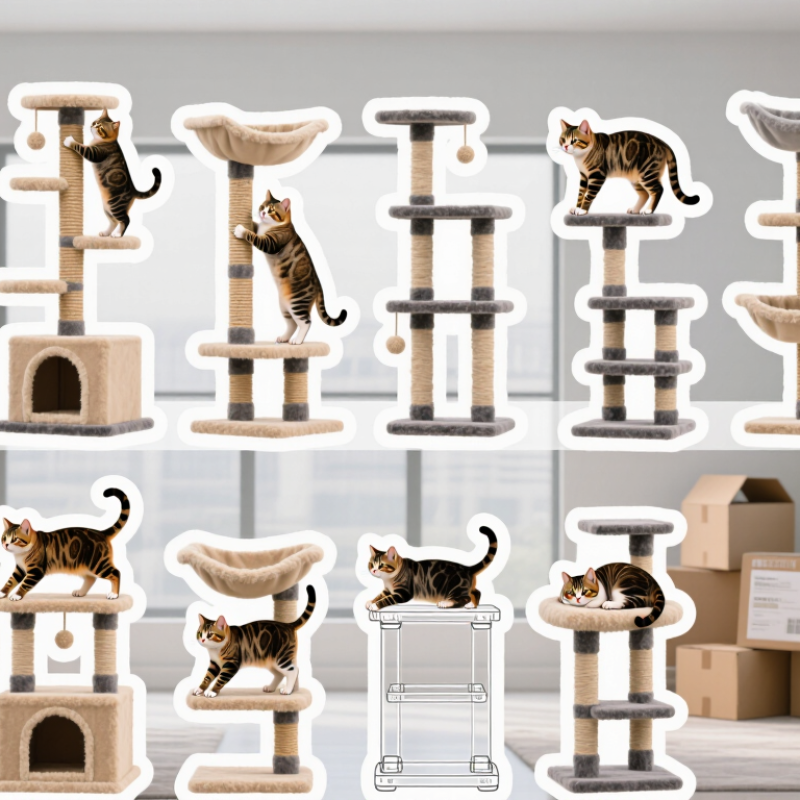
10 Cat Tree Buying Tips for Global Buyers

Understanding Cat Tree Types and Their Intended Uses

A cat tree is not one universal product. Its design should match the cat’s age, habits, and room size. APPA’s 2023–2024 National Pet Owners Survey reports about 46.5 million U.S. households own cats. That large user base includes climbers, scratchers, sleepers, and cautious older cats.

A compact scratching post suits cats that mainly stretch and mark surfaces. A multi-level tower works better for active cats needing vertical movement. Look for wide platforms, firm bases, and covered resting areas.

Wall-mounted systems save floor space, but they require reliable installation and suitable wall structure. Window perches offer sunlight and visual stimulation. However, some cats may ignore them.

FEDIAF’s 2024 Facts and Figures report estimates about 108 million cats live in Europe. This supports the need for varied furniture, not one standard design. In my experience, a tall tower can fail in a small room. It may wobble, block walking paths, or become difficult to clean. Measure the available floor area first. Then check each level’s height and access. Kittens may enjoy tunnels and ramps, while senior cats often need low steps and soft platforms. Safety testing should include shaking the structure and checking exposed fasteners.

A perfect cat tree does not exist. The right one fits the cat’s daily behavior.

Assessing Cat Size, Age, Activity, and Climbing Needs

Choosing a cat tree begins with the cat, not the room. Measure your cat from nose to tail, then check the platform size. A large adult needs wide shelves and a thick scratching post. Small platforms can cause awkward landings. I once chose a compact tree for an energetic cat, and the top shelf became unused space.

Age changes the design requirements. Kittens often enjoy short jumps, enclosed spaces, and stable steps. Older cats may need wider platforms, lower entrances, and softer resting areas. Avoid forcing a senior cat to climb several levels. A gentle ramp can help, although some cats ignore ramps completely. Observe movement at home before buying.

Activity level matters just as much as body size. An active climber needs multiple levels, strong joints, and a weighted base that resists tipping. A quiet cat may prefer one high perch and a private cubby. Check the platform height against the cat’s jumping ability. Vertical space is useful, but excessive height can create unnecessary risk. Inspect rope, fabric, and fasteners regularly for damage. Product weight limits are helpful, yet they may not reflect repeated jumping. That is an imperfect detail worth considering. Reliable sellers should provide clear measurements, materials, stability information, and care instructions.

Cat Tree Buying Guide: Size, Age, Activity, and Climbing Needs

The chart shows practical minimum dimensions for stable platforms and overall tree height. Larger or highly active cats generally need wider platforms and taller structures, while senior cats benefit from lower layouts and easier access. Use these figures as planning ranges and consider the cat’s weight, mobility, confidence, and available room.

Checking Materials, Stability, Safety, and Product Quality

A reliable cat tree begins with its materials. Check whether the platform uses solid wood, engineered board, or thin particleboard. Ask for material declarations and test reports when available. Avoid strong chemical odors, peeling surfaces, and rough edges. Covering fabric should resist scratching and remain easy to clean. Examine seams closely. Loose stitching can become a hazard. A practical buying lesson is simple: attractive fabric cannot compensate for weak construction.

Tip 1: Match the structure to the cat’s weight and activity level. A wide base reduces tipping, especially for large or energetic cats.

Tip 2: Push the assembled tree gently from several directions. It should not wobble.

Tip 3: Check every post, screw, connector, and ladder attachment.

Tip 4: Prefer rounded corners and firmly secured toys. Remove dangling parts if they can be swallowed.

Tip 5: Confirm that platforms provide enough space for stretching and turning.

Tip 6: Look for washable cushions or replaceable covers.

Tip 7: Review the assembly guide before ordering internationally. Missing tools or unclear diagrams create avoidable problems.

Tip 8: Check packaging strength, carton dimensions, and moisture protection.

Tip 9: Request consistent product photos and batch information from the supplier.

Tip 10: Compare safety claims with independent evidence, not sales language alone. Standards differ across markets, so buyers should verify local requirements.

I would also inspect one sample after delivery. Small defects are easy to overlook, and that assumption can be costly.

Comparing Space Requirements, Features, Prices, and Value

10 Cat Tree Buying Tips for Global Buyers

Comparing Space Requirements, Features, Prices, and Value

A cat tree is furniture, not merely a scratching post. Measure floor width, ceiling height, doorway clearance, and delivery access before comparing prices. 1. Mark the footprint with tape. 2. Leave a clear walking path. 3. Check whether the top platform fits below ceiling fans or shelves. APPA’s 2023–2024 National Pet Owners Survey reports that 66% of U.S. households own a pet, showing why adaptable home products matter. Small apartments need vertical value, not excessive bulk.

4. Match platform size to the cat’s body length. 5. Choose wide bases for active or heavier cats. 6. Inspect sisal coverage, fabric seams, and washable cushions. 7. Prefer replaceable scratching areas. 8. Check assembly instructions and spare-part availability. FEDIAF’s 2024 Facts & Figures report estimates about 108 million cats in Europe, but housing styles vary sharply between markets. A compact tower may suit Tokyo, while a wider, lower design may be safer in a family room.

Price comparisons should include shipping, duties, assembly time, and return costs. 9. Compare usable levels, not advertised height. 10. Divide total cost by expected service years. A cheaper frame can become poor value after unstable repairs or flattened padding. Stability matters most. I sometimes overvalue extra platforms and undervalue cleaning access. That is a useful correction. Ask for tested load limits, clear dimensions, material details, and independent customer feedback before ordering internationally.

10 Cat Tree Buying Tips for Global Buyers - Comparing Space Requirements, Features, Prices, and Value

Tip What to Compare Recommended Space Useful Features Typical Price Range (USD) Value Assessment Global Buyer Consideration
1 Measure the available area first Allow at least 10–15 cm (4–6 in) of clearance from walls, doors, and furniture. Compact footprint, balanced base, and clearly stated assembled dimensions. $40–$100 High value for small apartments Check both metric and imperial measurements, especially for narrow rooms or balconies.
2 Match height to the cat’s climbing habits Small: 60–100 cm (24–39 in); medium: 100–150 cm (39–59 in); tall: 150–190 cm (59–75 in). Multiple levels, staggered platforms, and ramps or steps for easier access. $60–$180 Tall models offer more vertical enrichment per square meter. For tall units, confirm ceiling height and whether anti-tip hardware is included.
3 Choose a stable base A broad base is preferable; for tall models, a base width of roughly 50–70 cm (20–28 in) is common. Wide baseboard, low center of gravity, thick support posts, and wall-anchoring strap. $80–$220 Stability is more important than extra height. Use the included anchor where possible, particularly in homes with children or active cats.
4 Evaluate scratching coverage Provide several reachable scratching zones rather than only one small post. Sisal-wrapped posts, horizontal scratch boards, replaceable surfaces, and varied angles. $50–$160 Replaceable scratching parts can reduce long-term ownership cost. Natural sisal is commonly preferred for durability; verify replacement availability in the destination market.
5 Check platform size and weight capacity Resting platforms should be large enough for the cat to turn around and lie comfortably. Raised edges, padded perches, reinforced joints, and a published maximum load. $70–$200 Better value when the unit supports the largest household cat safely. Look for load information in kilograms and pounds; do not rely only on general size labels.
6 Compare materials and construction Construction quality matters more as height, weight, and the number of cats increase. Thick engineered-wood panels, secure hardware, dense covering, and neatly finished edges. $90–$250 A stronger frame usually provides better durability than decorative extras. For humid climates, inspect covering, wood surfaces, and packaging protection against moisture.
7 Consider cleaning and maintenance Place the tree where fur, litter, and debris can be vacuumed easily. Removable cushions, washable fabric, smooth surfaces, and accessible corners. $60–$180 Easy-clean designs often deliver better long-term value than heavily plush models. Confirm washing instructions, fabric care requirements, and the availability of replacement covers.
8 Select features according to the cats’ needs One enclosed space may suit a shy cat; several open platforms may suit social or active cats. Hammocks, condos, tunnels, toys, ladders, and elevated observation points. $80–$240 Prioritize frequently used features instead of paying for unused accessories. Senior or less mobile cats generally benefit from ramps, lower steps, and easy-to-reach beds.
9 Calculate delivered cost, not only product price Large cat trees may require oversized packaging and more storage space before assembly. Flat-pack packaging, clear assembly instructions, numbered parts, and standard fasteners. $50–$250 + delivery and taxes A moderately priced flat-pack model may cost less overall than a bulky assembled unit. Estimate shipping, customs duties, local taxes, delivery restrictions, and possible return costs.
10 Review safety, warranty, and spare parts Inspect the unit regularly and keep it away from unstable furniture or heat sources. Anti-tip strap, rounded edges, secure toy attachments, assembly warranty, and replacement posts. $100–$300 After-sales support and replaceable parts can provide the best lifetime value. Check warranty terms, customer service coverage, electrical safety only if accessories use power, and local return rights.

Reviewing Global Shipping, Certifications, Assembly, and Support

Buying a cat tree across borders requires more than comparing photos and prices. I check carton dimensions, packed weight, and destination surcharges before approving an order. A tall tower may trigger dimensional-weight fees, even when its materials are light. Ask whether duties, taxes, and final-mile delivery are included. Get the shipping terms in writing. Port delays happen. So do missing cartons.

Certifications deserve careful reading. Claims such as “tested” mean little without a report number, testing date, and applicable standard. Request evidence for fabric safety, wood panels, coatings, and structural strength. Requirements vary by destination, so local authorities or an experienced importer should confirm the documents. Avoid assuming one certificate covers every market. I have seen paperwork that described a similar product, not the exact model. That mistake is avoidable. Assembly affects safety and customer satisfaction. Look for numbered parts, clear diagrams, labeled hardware, and a realistic time estimate. Check whether the base needs wall anchoring, especially for active or heavier cats.

Support is part of the purchase, not an afterthought. Confirm response channels, working hours, language coverage, and replacement procedures before payment. Ask how damaged parts are handled after delivery. Keep photos of the carton and contents during unboxing. They can clarify responsibility quickly. My own review process still misses small details sometimes, such as a screw bag hidden beneath the base. A second inspection helps. Reliable sellers provide traceable instructions, realistic promises, and help that continues after the parcel arrives.

Article Source:

  • Wechat