
Biological Water Treatment can turn dissolved pollutants into measurable outcomes, but biology is not a plug-and-play solution. Microbes need suitable temperature, oxygen, nutrients, and time. A sudden toxic discharge or sharp flow change can disrupt the process before operators see a clear warning. Buyers should assess more than tank volume and equipment price.
The scale of the challenge is substantial. UN-Water’s 2024 progress report estimates that 42% of household wastewater generated worldwide was not safely treated before discharge in 2022. That figure makes reliable treatment design essential. Yet the right system depends on the actual wastewater, discharge targets, site conditions, and available operating skills. A sales brochure cannot settle those questions. Ask for influent data, pilot evidence where needed, and guarantees that define sampling methods and operating limits.
Professor Mark van Loosdrecht, an environmental biotechnologist and Lee Kuan Yew Water Prize laureate, has championed a resource-recovery approach: “Wastewater is a resource, not a waste.” That idea is useful, but it needs practical scrutiny. Resource recovery does not automatically make a plant cheaper or simpler. Buyers should examine energy demand, sludge handling, sensor maintenance, spare parts, and operator training. A small detail matters: who responds when dissolved oxygen readings drift at 2 a.m.? The ten tips ahead focus on those decisions, from process selection to lifecycle cost. Biological treatment can perform well. Only with sound data, realistic expectations, and consistent operation.
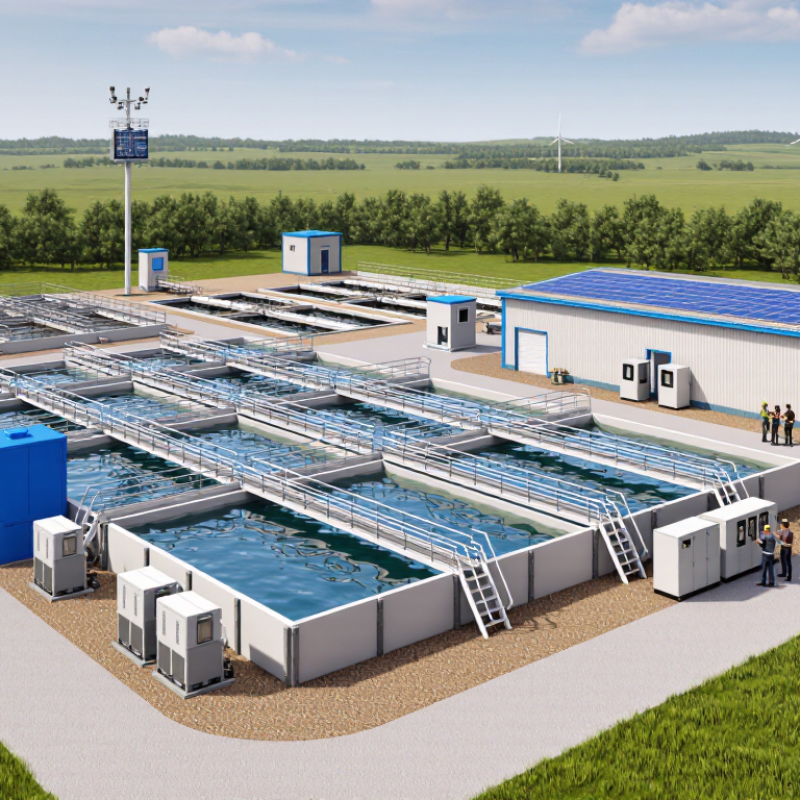
Biological water treatment uses bacteria and other microorganisms to break down biodegradable pollutants in water. In an aeration tank, fine bubbles supply oxygen while microbes consume dissolved organic matter. This can lower biochemical oxygen demand (BOD) and chemical oxygen demand (COD).
In plain terms, waste becomes food.
Some systems convert ammonia into nitrate, then remove nitrate through denitrification in low-oxygen zones. Nitrogen and phosphorus may also be reduced, depending on the process design. A brown floc sample under a microscope can contain a busy community, not one miracle organism.
This treatment is common for sewage and biodegradable industrial wastewater, but performance depends on stable conditions. Operators monitor oxygen, pH, temperature, and sludge settling; abrupt changes can slow microbial activity. A sudden toxic discharge, for example, may disrupt the biological balance.
Not everything. Dissolved salts, many metals, and persistent compounds such as PFAS generally require other treatment steps. Nitrate removal also needs a suitable process and carbon source; it does not happen in every tank.
Real systems are less neat than diagrams. A clear-looking outlet does not prove every contaminant is gone, so testing should match the site’s treatment goals and water use.
Before comparing biological treatment systems, measure how much wastewater the site produces across a normal week. Record average and peak flow, including busy shifts, cleaning cycles, and weekend shutdowns. A single grab sample can miss important changes. Collect samples at different times and test key indicators such as BOD, suspended solids, pH, temperature, and nutrients. Note unusual discharges that could affect biological activity.
Tips: Keep a simple flow log. Compare morning and evening readings. A spreadsheet helps, but it can hide a bad sampling day; repeat measurements when results seem surprising.
Next, define the treated-water quality the process must achieve and where the water will go. Identify available space, power, operator time, and plans for handling excess sludge. Biological systems need stable conditions, so ask how the process responds to cold weather, variable loads, or cleaning chemicals. A system that fits average flow may struggle during a short production surge. Share representative test results and operating records with a qualified wastewater professional before selecting equipment. Some sites lack reliable historical data; acknowledge that gap and plan for additional sampling rather than treating estimates as facts.
Typical untreated domestic wastewater ranges can help frame an initial assessment. Actual wastewater varies by source, and industrial discharges may fall outside these ranges.
How to use this chart: Treat these broad ranges as screening context, not design values. Before selecting a biological treatment system, test representative samples and confirm flow, loading variability, temperature, and discharge requirements.
Compare biological treatment options against the wastewater they will actually receive, not a brochure’s average. Record daily flow, peak loads, temperature, and seasonal changes. A food processor may discharge warm, concentrated wastewater in short production pulses. Municipal influent is often steadier, though storms can dilute it. These differences affect whether activated sludge, attached-growth media, or a membrane bioreactor fits the site. Context matters.
Compare more than removal rates. Check the required effluent quality, available footprint, energy demand, sludge production, and operator workload. Conventional activated sludge can be flexible, but it needs careful aeration and solids control. Attached-growth systems may handle load fluctuations well, depending on design and wastewater characteristics. Membrane bioreactors can produce low-solids effluent in a compact footprint, but membranes add energy and maintenance needs. Small details count. Ask for expected aeration use, cleaning frequency, and sludge-handling requirements, not just tank dimensions.
Request performance data from facilities treating similar wastewater, and check the conditions behind those results. A pilot test can reveal settling problems or oxygen limits before construction. Yet a short trial may miss winter temperatures or unusual production peaks. The comparison is rarely tidy. Treat promising results as evidence, not a guarantee, and leave room in the design for operating conditions that are not fully predictable.
| Tip | Comparison Dimension | Processes and Technologies to Compare | What Buyers Should Check |
|---|---|---|---|
| 1. Define the treatment objective first | Required effluent quality and permit limits | Conventional activated sludge, sequencing batch reactors (SBR), membrane bioreactors (MBR), attached-growth systems, and combined treatment trains | Identify the required limits for BOD or COD, suspended solids, ammonia, total nitrogen, and phosphorus. Biological treatment alone may not meet every nutrient or reuse requirement; additional treatment steps may be needed. |
| 2. Match the process to the wastewater | Flow variation, strength, temperature, and inhibitory compounds | Suspended-growth processes, moving-bed biofilm reactors (MBBR), fixed-film systems, and anaerobic treatment | Use representative influent data, including peak flows and seasonal changes. Industrial wastewater may require equalization, pretreatment, or treatability testing if it contains toxic, inhibitory, or highly variable contaminants. |
| 3. Compare footprint and site constraints | Available land and layout flexibility | MBR, SBR, MBBR, conventional activated sludge, trickling filters, and constructed wetlands | Compare the complete site footprint, including tanks, clarifiers, membranes, sludge handling, access, and future expansion. MBRs can produce low-solids effluent in a compact layout, while wetlands generally require substantial land. |
| 4. Evaluate energy and operating needs | Aeration, pumping, mixing, and routine labor | Aerobic suspended-growth systems, MBBR, MBR, trickling filters, and anaerobic systems | Aeration is commonly a major energy use in aerobic treatment. Compare projected energy consumption and control requirements using the same design basis, and include pumps, mixers, membrane equipment, and other auxiliaries. |
| 5. Check how solids are separated | Clarification, filtration, and effluent suspended solids | Activated sludge with secondary clarifiers, SBR, MBR, and attached-growth systems with downstream clarification | Ask how biomass is retained and separated from treated water. MBRs use membranes instead of conventional secondary clarification for solids separation, but require membrane cleaning and management of fouling. |
| 6. Verify nutrient-removal capability | Nitrogen and phosphorus treatment | Biological nutrient removal activated-sludge configurations, SBR, MBBR, and treatment trains with chemical phosphorus removal | Confirm that the proposed process includes the required anoxic and/or anaerobic conditions, recycle flows, and control strategy. Biological phosphorus removal can be sensitive to wastewater characteristics; chemical dosing may be used where needed. |
| 7. Compare sludge production and handling | Waste activated sludge, screenings, and residuals management | Aerobic activated sludge, MBR, trickling filters, and anaerobic treatment | Request estimates for sludge quantity and characteristics under expected operating conditions. Include thickening, dewatering, storage, transport, and disposal or beneficial-use costs in the comparison. |
| 8. Consider temperature and startup conditions | Biological activity, commissioning, and process recovery | Aerobic systems, anaerobic reactors, biofilm systems, and seasonal or outdoor installations | Biological rates depend on temperature and wastewater composition. Nitrification can be especially sensitive to low temperatures and operating conditions. Ask for design assumptions, acclimation time, and a startup and upset-recovery plan. |
| 9. Review maintenance and operator requirements | Mechanical complexity, monitoring, and specialist support | MBR, SBR, MBBR, conventional activated sludge, and passive attached-growth systems | Compare routine inspection and cleaning tasks, instrument needs, spare parts, operator training, and service access. MBRs require membrane-specific maintenance; all biological processes need appropriate process monitoring and biomass management. |
| 10. Compare lifecycle performance, not just purchase price | Total cost, reliability, and evidence at the design conditions | All candidate biological processes and treatment trains | Evaluate capital and operating costs over the expected project life, including energy, chemicals, labor, residuals, replacement parts, and upgrades. Request comparable references, performance guarantees with clear conditions, and pilot or treatability testing when influent uncertainty is significant. |
Biological treatment performance depends on how well the design matches the wastewater. A useful assessment includes flow patterns, temperature, pH, and the concentration of biodegradable material. Average values can hide sharp morning peaks or weekend changes. Peak loads matter. Equalization tanks can soften these swings, but they need enough working volume and proper mixing. Hydraulic retention time and sludge age also affect treatment; too little contact time can reduce removal, while excess biomass may burden settling equipment. Tank layout matters, too. Dead zones can leave solids untouched, even when aeration looks adequate.
During operation, monitor dissolved oxygen, pH, temperature, and settling behavior—not just the final discharge sample. Low oxygen can slow aerobic microbes; excessive aeration wastes energy and may disrupt floc formation. Small changes matter. Check sensors against field measurements, and record trends beside flow and loading data. Nutrient balance can limit biological growth, but adding nutrients without testing may create avoidable costs. Watch the sludge. A rising sludge blanket, poor settling, or unusual odor can signal a process shift, though none proves a single cause. Operators should investigate before changing several settings at once. Even a sound design needs adjustment as seasons and influent conditions change.
Biological water treatment costs extend beyond the purchase price. Compare energy use, chemicals, sludge handling, laboratory testing, and planned downtime. Ask suppliers to show assumptions behind their estimates, including flow changes and seasonal temperature shifts. A low initial quote may exclude essential monitoring equipment. Check how the proposed process supports your discharge limits and reporting duties. Requirements vary by site, so confirm details with qualified local specialists.
Tip: Request a maintenance schedule with real task intervals. Ask how often operators must clean screens, check pumps, and test dissolved oxygen. Clarify which spare parts should be kept on site and their delivery times. Small delays matter.
Supplier support deserves practical questions. Who answers a process alarm at 2 a.m.? Is operator training included, and can staff review sample operating logs before commissioning? Ask for references from facilities with similar flows and wastewater characteristics. Compare response commitments in writing, not just sales presentations. A spreadsheet can look exact and still miss labor time. I would leave room for that uncertainty, then revise the estimate after a few months of actual operating data.