
Designated supplier of the world's top 500 smart houses

7 Best Cement Mortar Types for Construction Projects

Choosing the right Cement Mortar is not a minor specification detail. It affects bond, workability, water retention, and how masonry performs through changing weather. A mix that spreads smoothly on a cool morning may stiffen quickly under afternoon sun. Small site conditions matter.

The U.S. Geological Survey’s Mineral Commodity Summaries 2024 estimated global cement production at about 4.1 billion metric tons in 2023. That scale makes informed material choices important, but production figures alone cannot determine which mortar suits a wall, repair, or paving project. ASTM C270 provides recognized specifications for masonry mortar, including requirements tied to strength and other performance characteristics. Dr. Karen Scrivener, an expert in cement chemistry, has emphasized in her published work the importance of reducing clinker to lower cement’s environmental impact. Put simply, lower-impact choices still need to meet the job’s performance requirements.

This guide compares seven common cement mortar types and explains where each may fit. Some prioritize strength; others offer greater workability or suit particular masonry applications. The strongest option is not automatically the best one. A high-strength mix can be an awkward choice for softer historic brick, and site conditions may change what works in practice. That deserves a second look. The right selection should follow project specifications, material compatibility, and manufacturer guidance—not a rule of thumb alone.
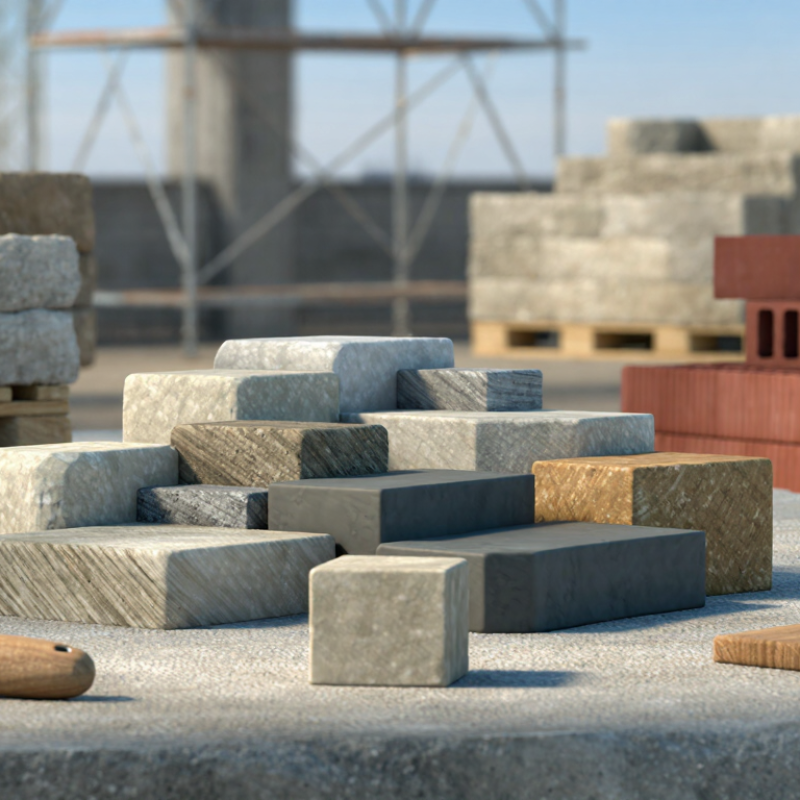
7 Best Cement Mortar Types for Construction Projects

What Cement Mortar Is and Its Role in Construction

Cement mortar is a workable blend of cement, sand, and water. It differs from concrete because it generally contains no coarse stone aggregate. The cement binds the sand as the mixture hardens. A mason adjusts the water carefully: mortar should spread under a trowel, not run off it. It matters.

On a building site, mortar beds bricks and blocks, fills joints, and helps distribute pressure between masonry units. It also seals gaps against wind and rain when correctly applied. On walls, a related mortar mix can form a plaster or render layer over the surface. The right mix depends on the units, exposure, and intended use; one recipe does not suit every wall. Too much cement can make mortar stiff and prone to cracking, while excess water can weaken the finished work.

Good results depend on more than ingredients. The sand should be clean and reasonably consistent, and the masonry surface may need light dampening in hot, dry conditions. Fresh mortar needs protection from rapid drying, heavy rain, and freezing temperatures while it cures. Even experienced crews can misjudge water on a windy afternoon. Checking the mix as work progresses is less glamorous than laying bricks, but it can prevent loose joints and uneven finishes.

Key Ingredients and Properties of Cement Mortar

Cement mortar is a blend of cement, fine aggregate, and water, sometimes modified with hydrated lime or approved admixtures. Cement binds the mix as it hydrates; sand adds body and limits shrinkage. Water activates hydration and makes mortar workable, but excess water can weaken hardened mortar and increase shrinkage. A practical check is the trowel: mortar should spread smoothly and hold its shape without slumping.

Ingredient proportions shape key properties. Fine, well-graded sand can improve cohesion, while overly coarse or dirty sand may impair workability and bond. Lime can improve plasticity and water retention, though its effect depends on the mix and use. ASTM C270/C270M-19a sets minimum laboratory compressive strengths of 2,500 psi for Type M, 1,800 psi for Type S, 750 psi for Type N, and 350 psi for Type O mortar under its property-specification method. These are measured values, not promises of field performance. A neat mix on paper can still disappoint; substrate suction, weather, and water measurement matter. Crews sometimes adjust water by eye, which is convenient but not very reliable.

7 Best Cement Mortar Types for Construction Projects - Key Ingredients and Properties of Cement Mortar
Mortar type Key ingredients Typical properties Common applications and notes
Type M Portland cement or blended cement, hydrated lime or other permitted lime component, masonry sand, and water; proportions are set by the project specification. Highest-strength common ASTM C270 mortar type. Its specified minimum compressive strength is 2,500 psi (17.2 MPa) at 28 days when proportioned to the property specification. Used where high-strength masonry mortar is specified, such as some below-grade or heavily loaded work. Confirm compatibility: very strong mortar can be unsuitable for softer masonry units.
Type S Portland cement or blended cement, hydrated lime or another permitted component, masonry sand, and water. Specified minimum compressive strength: 1,800 psi (12.4 MPa) at 28 days under the ASTM C270 property specification. Offers higher strength than Types N and O. Commonly specified for structural masonry and some below-grade or exposed work. Actual suitability depends on the design, units, exposure, and local requirements.
Type N Portland cement or blended cement, hydrated lime or another permitted component, masonry sand, and water. Specified minimum compressive strength: 750 psi (5.2 MPa) at 28 days under the ASTM C270 property specification. A general-purpose balance of strength and workability. Often used for above-grade, non-specialized brick and block masonry when allowed by the design and exposure conditions.
Type O Portland cement or blended cement, hydrated lime or another permitted component, masonry sand, and water; typically proportioned for lower strength and good workability. Specified minimum compressive strength: 350 psi (2.4 MPa) at 28 days under the ASTM C270 property specification. Relatively workable but lower in strength than Types M, S, and N. Generally limited to non-load-bearing interior work or compatible repair applications. Not typically selected for structural or severe-exposure masonry.
Polymer-modified cement mortar Cement, graded sand or mineral fillers, water, and polymer additives or a polymer-modified liquid component; exact formulation varies by intended use. Polymers can improve adhesion, flexibility, and resistance to cracking or water penetration compared with an unmodified mix. Performance depends on the formulation and installation conditions. Used for applications such as tile setting, repairs, or overlays when the product is specified for the substrate and exposure. It is not automatically waterproof.
Thin-set cementitious tile mortar Cement, carefully graded sand, and water-retention and workability additives; some formulations also contain polymers and are mixed with water or a specified liquid additive. Designed to bond tile in a relatively thin bed. Open time, slip resistance, and bond performance vary by formulation and tile type. Used for tile installation on approved floors and walls. Choose a mortar suited to the tile, substrate, location, and applicable installation standard; it is not a substitute for masonry mortar.
Rapid-setting cement repair mortar Cement or rapid-hardening hydraulic binder, graded mineral aggregate, and formulation-specific setting or workability additives; water is added as directed. Develops usable strength more quickly than many conventional mortars, but has a shorter working time. Set time and strength gain depend on the mix and temperature. Used for time-sensitive patching or repair where the specified material is suitable. Follow the stated substrate preparation, mixing, curing, and thickness requirements.

Note: ASTM C270 mortar types may be specified by proportions or by properties. The strength figures above are minimum 28-day values for the property specification, not universal results for every mix. Select mortar to suit the design, masonry units, exposure, and applicable building code.

Seven Cement Mortar Types and Their Common Uses

Cement mortar is not one fixed recipe; its strength, workability, and setting time should match the job. General-purpose cement-sand mortar works for routine brick or block laying, where joints need steady support. Measure water carefully. A mix that looks easy to spread may still become too weak if it is overly wet.

Type M mortar has high compressive strength and is commonly used for foundations, retaining walls, and heavy masonry. Type S offers strong bond and good resistance to lateral pressure, making it suitable for exterior walls and paving. Type N is a practical choice for many above-grade walls exposed to ordinary weather. Type O is softer, so it can suit interior, non-load-bearing masonry and some repairs to older, softer brick. These classifications describe performance, not a universal recipe; project specifications and local standards still matter.

Polymer-modified mortar contains additives that improve adhesion and flexibility. It is often used for tile work or surfaces that may experience small movements. Rapid-setting mortar hardens quickly and can help with time-sensitive repairs, but it leaves little room to adjust placement. That can catch a new worker off guard. Even an experienced mason may need a small test batch when temperature, sand moisture, or substrate conditions differ from the usual.

7 Common Cement Mortar Mixes and Their Uses

The chart compares typical volume proportions of sand to one part cement. Richer mixes are often specified for pointing, screeds, or repair work, while leaner mixes are commonly used for masonry. Actual proportions depend on project specifications, materials, exposure, and local standards; follow the approved mix design.

How Mortar Types Differ in Strength and Workability

Mortar choice is a balance: higher compressive strength does not automatically mean better masonry. ASTM C270, the industry specification for masonry mortar, lists 28-day minimum strengths of 2,500 psi for Type M, 1,800 psi for Type S, 750 psi for Type N, and 350 psi for Type O. These are laboratory benchmarks, not guarantees of wall performance. Joint design, curing, and masonry units matter too. Strength alone can mislead.

In practice, Type M suits demanding below-grade work, while Type S offers strength with useful flexibility for many structural applications. Type N is a common choice for above-grade walls because it balances strength and workability. Type O is softer and generally limited to protected, non-load-bearing interiors. The other mortar options in a project may vary by cement-lime proportions and specified performance. A workable mix spreads smoothly under a trowel and holds its shape; a stiff mix can resist tooling and leave uneven joints. There is a trade-off. I would not assume the strongest mix is the safest choice for older or softer masonry.

Tips: Check the project specification and ASTM C270 requirements before mixing. Make a small test batch; if the mortar crumbles or slumps, adjust only as the approved mix design allows. Keep joints consistent, and avoid adding water after the mortar begins to stiffen.

How to Choose the Right Mortar for a Project

Choosing mortar starts with the wall, not the bag. Identify the masonry units, structural loads, exposure, and project specification before selecting a type.

ASTM C270-19a lists 28-day laboratory compressive-strength minimums of 2,500 psi for Type M, 1,800 psi for Type S, 750 psi for Type N, and 350 psi for Type O. These figures help compare types, but strength alone does not determine suitability. A very strong mortar can be a poor match for softer brick, increasing the risk of damage during movement or repairs.

Match the mortar to the job conditions. Type N is commonly specified for above-grade walls with moderate loads, while Type S may suit applications needing greater bond or lateral resistance. Type M is often considered for heavy-load or below-grade masonry, subject to the design documents.

For an older brick wall, compatibility matters: a hard joint can shift wear into the brick faces. Check the unit manufacturer’s guidance and consult the project engineer when loads or exposure are unusual.

On site, workability also matters; mortar should hold on a trowel without crumbling or slumping. Small detail, big effect.

ASTM C270 also distinguishes proportion and property specifications, so confirm which method the project requires. A field mix may behave differently from a laboratory-tested mix, and that difference deserves attention.

  • Wechat