
Designated supplier of the world's top 500 smart houses

Best Barn Door Slab Manufacturers in China

Choosing a dependable Barn Door Slab manufacturer in China takes more than comparing catalog photos. The slab is the visible, moving part of a door system, so flatness, edge quality, finish consistency, and stable dimensions matter. A sample can reveal details a specification sheet may miss. Check the grain, paint coverage near the edges, and panel feel. Look closely. Ask how the factory controls moisture, verifies dimensions, protects corners, and records defects before packing. These steps do not guarantee a perfect shipment, but they make quality easier to assess.

This guide examines manufacturers through practical factors: production capability, material and finish options, sample quality, communication, inspection practices, and export packaging. “Best” depends on the project. A hotel renovation may need consistent finishes across many doors, while a small home project may prioritize a custom size or wood appearance. Buyers should confirm whether slabs are made in-house or through subcontractors, and request current drawings, samples, and inspection details. Clarify what the quotation includes; a low price may exclude finishing, hardware, or protective packaging. Even careful checks cannot remove every risk. Supplier claims still need verification. Comparing evidence, asking specific questions, and reviewing a sample under ordinary room lighting can help buyers make a more informed choice.
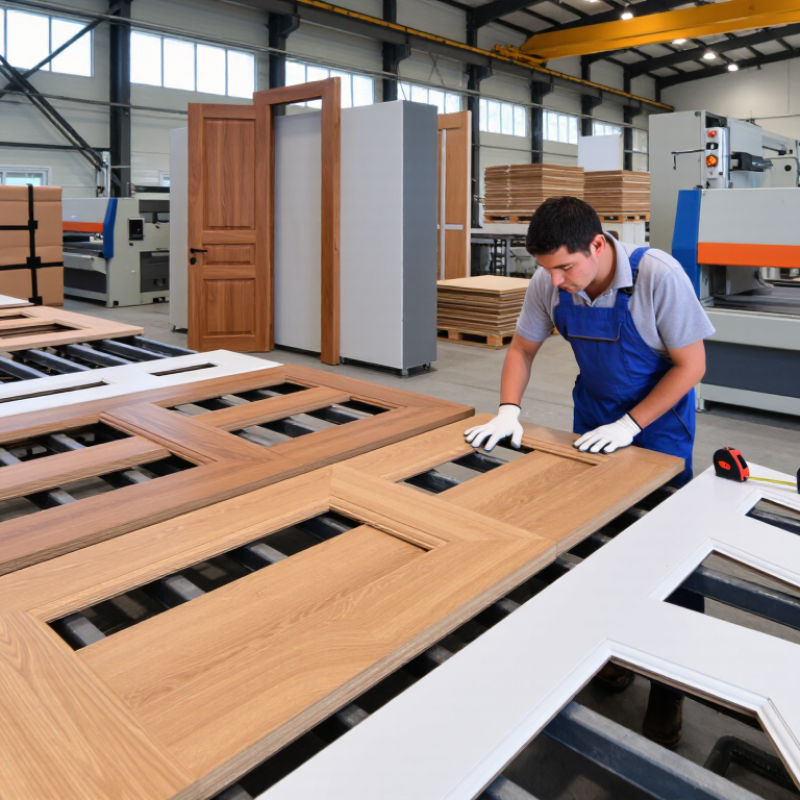
Best Barn Door Slab Manufacturers in China

Barn Door Slab Basics: Common 1⅜-Inch Thickness and 24–36-Inch Widths

Barn Door Slab Basics: Common 1⅜-Inch Thickness and 24–36-Inch Widths

Many barn door slabs are about 1⅜ inches thick, with widths commonly ranging from 24 to 36 inches. These are useful starting points, not guaranteed dimensions. A 30-inch slab, for example, may suit a doorway around that width, but overlap is often needed to limit gaps. Measure the opening, trim, and nearby walls before choosing a size. Small details matter.

Thickness affects hardware fit and door stability. Check the track maker’s clearance requirements, especially if the slab has a raised panel or decorative trim. A solid or heavier slab also needs hardware rated for its actual weight. Width alone does not tell the whole story. I would verify the product drawing and finished dimensions rather than rely only on a catalog label; measurements can vary slightly between manufacturers.

Tips: Use a tape measure at the top, middle, and bottom of the opening. Record the largest width and height. Check that the slab can clear baseboards and light switches when sliding. Leave room for the track above. A little extra checking helps; a tidy chart cannot replace the real doorway.

Core Materials Compared: Solid Wood, MDF, and Engineered-Wood Constructions

For buyers comparing barn door slab manufacturers in China, core construction deserves more attention than a smooth catalog photo. Solid wood offers visible grain, a substantial feel, and the option of sanding small surface marks. It can also move with seasonal humidity. A wide slab may cup or twist if lumber is not properly dried and assembled. Details matter.

MDF provides a uniform face that takes paint evenly, making it useful for clean, flat designs. It is generally heavier than some hollow-core options, and exposed edges need reliable sealing against moisture. Engineered-wood slabs combine veneers or wood fibers with a stable core. Construction varies, so ask for a cross-section or specification sheet. No material wins every room.

When reviewing a supplier, request the slab thickness, core composition, edge treatment, and finish schedule in writing. Check sample corners for chipped veneer, uneven paint, or gaps at joints. Ask how panels are pressed and how moisture is controlled during production. A low price can hide a thin core, but a detailed quote does not guarantee consistency. Compare samples from the actual production line when possible. Even then, color may shift slightly between batches.

Best Barn Door Slab Manufacturers in China — Core Materials Compared: Solid Wood, MDF, and Engineered-Wood Constructions

Comparison Factor Solid Wood MDF Engineered-Wood Construction
Typical construction Boards or staves made from natural timber, sometimes joined or laminated to form a wider slab. Wood fibers combined with resin and pressed into a dense, uniform panel. A layered or composite assembly, such as a plywood core with veneer, a framed slab with infill, or a wood-based core with surface layers.
Appearance Natural grain, knots, and color variation; appearance depends on the species and board selection. Smooth, consistent surface with no natural grain; commonly painted or covered with a decorative surface. Depends on the core and face material; veneer can provide a wood appearance, while other facings offer a more uniform finish.
Dimensional stability Wood expands and contracts as moisture conditions change. Good drying, construction, and finishing help reduce movement. Generally uniform and less prone to grain-related movement than solid wood, but can swell if exposed to moisture. Layered construction can help limit movement, but stability varies with the core, bonding, and manufacturing quality.
Weight Varies substantially by species, slab thickness, and internal construction. Often relatively heavy for its size because of its density; confirm the finished slab weight. Highly variable. Hollow or framed designs may be lighter than solid-core designs, while dense cores can be heavy.
Moisture considerations Requires suitable sealing and stable indoor conditions; prolonged moisture exposure can cause movement or damage. Edges and unsealed areas are vulnerable to moisture-related swelling; use only products and finishes suited to the intended environment. Moisture performance depends on the core, adhesive, edge treatment, and facing; specifications should identify the materials used.
Machining and hardware Can be trimmed and routed by a qualified fabricator; fastening performance depends on the species and local construction. Machines to a smooth profile, but edges may need sealing and fastener holding should be checked for the selected panel and hardware. Machining and screw holding vary by construction; confirm the location and reinforcement of track, handle, and guide attachments.
Finishing options Can be stained, clear-coated, or painted; natural variation remains visible under transparent finishes. Well suited to paint and many applied decorative surfaces; it does not display natural wood grain. Can be painted or surfaced with veneer or other finishes, depending on the face material and edge details.
Typical cost position Often higher when using premium species or extensive solid-wood construction; actual cost depends on grade and design. Often an economical option for a smooth, painted appearance, subject to panel grade and finishing requirements. Ranges widely: simple composite constructions may be economical, while quality veneer or complex assemblies can cost more.
Common advantages Natural character, repairability in many designs, and the ability to refinish some surfaces. Consistent surface, paint-friendly face, and predictable panel dimensions. Design flexibility; layered construction can balance appearance, stability, and weight when appropriately specified.
Points to verify when sourcing Wood species, moisture content, grading, jointing method, finish, and finished slab weight. Panel grade, thickness, emissions documentation where required, edge sealing, surface finish, and hardware attachment details. Core type, face material, adhesive and emissions documentation where required, edge construction, reinforcement, and finished slab weight.
Best suited to Projects that value natural wood character and can accommodate material variation and routine care. Painted interior slabs where a smooth, uniform surface is a priority and moisture exposure is controlled. Projects requiring a specified balance of surface appearance, construction, stability, or weight, based on the exact assembly.

Note: “Engineered wood” covers several different constructions, and MDF is itself an engineered wood product. The categories above distinguish MDF panels from other layered, framed, or composite slab constructions. Actual performance depends on the product specification, workmanship, finish, installation, and indoor conditions.

Manufacturing Quality: 8–12% Moisture Content and Dimensional-Stability Checks

Barn door slabs need more than a clean finish. Their moisture content affects how they behave after installation. Many manufacturers target 8–12%, then verify readings with a calibrated moisture meter. The right range can vary with wood species and destination climate, so buyers should ask how the target is set.

A reliable check samples several points, not just the center of the slab. Inspect readings near the edges and around joints, where uneven drying may cause trouble. Small differences matter. After acclimation, workers can check the slab on a flat surface for bowing, twisting, and changes in width. Comparing diagonals also helps reveal squareness issues before hardware is fitted. Keep the inspection record with the order.

Ask Chinese suppliers how they control drying, storage, and final measurement—not only what number appears on a specification sheet. Request readings from the actual production batch and clarify the measurement method. A single meter reading is not enough. Moisture checks reduce risk, but they cannot guarantee a perfectly stable door; wood still responds to its surroundings. That caveat deserves attention, even when the sample looks excellent.

Barn Door Slab Manufacturing Quality: Moisture Specification

The stated moisture-content target is 8–12%. The chart shows the lower and upper specification limits, not measured results from a manufacturer.

Dimensional-stability checks: Measure slab width, height, and thickness before and after conditioning, then compare the readings to identify movement. No measurement results are provided here.

Evaluating Chinese Suppliers: ISO 9001, FSC Traceability, MOQ, and Lead Time

China’s barn-door slab suppliers should be assessed through verifiable controls, not polished catalogs. The ISO Survey 2022 recorded 1,265,216 valid ISO 9001 certificates worldwide. That figure reflects broad adoption, not guaranteed product quality.

Ask for the supplier’s current certificate, scope, issuing body, and factory address. Verify them independently. A certificate covering trading or assembly may not cover slab production.

Check FSC claims against valid chain-of-custody records and product-specific paperwork. The FSC 2023 Annual Report reports more than 160 million hectares of certified forest worldwide. That scale matters, but it does not prove a particular slab’s wood origin. Ask for traceability documents linked to the order.

Request MOQ by slab dimensions, finish, and packaging; a single headline number can hide costly exceptions. Ask whether sample orders count toward production MOQ.

Get lead time split into material sourcing, manufacturing, inspection, and shipment readiness. Require dates in writing, plus an explanation of what happens when moisture readings or finish checks fail.

Ask for recent production records, not only a sample. Small details matter. A certificate can look tidy while factory records remain incomplete, so document checks should be paired with a live production-area review.

Supplier data may also be inconsistent; record assumptions before comparing quotes.

Shortlisting Manufacturers by Slab Size, Finish Options, and Hardware Compatibility

For a barn door slab, shortlist Chinese manufacturers by the exact opening, not a nominal size alone. Request finished width, height, thickness, and allowable dimensional tolerances in writing. A slab that is too narrow leaves a visible gap; one that is too tall may drag on uneven flooring. Ask for a dimensioned drawing before production. Small details matter.

Finish options need the same scrutiny. Compare samples in the room’s actual light, and inspect edges, corners, and the bottom rail—not just the broad face. The USDA Forest Products Laboratory’s Wood Handbook reports equilibrium moisture content near 6% at 30% relative humidity and about 12% at 65%, around 70°F. That change can affect wood movement. Ask how slabs are acclimated and sealed. A polished sample tells only part of the story.

Hardware compatibility is not an afterthought. Confirm slab weight, thickness, track capacity, hanger spacing, floor-guide clearance, and handle position against the intended system. Request a drilling template and verify whether the slab arrives pre-bored; misplaced holes are hard to disguise. For wood doors, ask whether the product is specified to the applicable WDMA I.S.1A requirements. Then check finish and size tolerances on the purchase document. It sounds fussy. It saves rework. Manufacturers may describe options differently, so compare drawings and test-fit samples rather than relying on catalog labels alone.

  • Wechat