How to Choose Color Coated Steel Sandwich Panel in 2026?
Choosing a Color-Coated Steel Sandwich Panel in 2026 requires more than comparing prices, colors, and advertised thicknesses. The right panel must suit the building’s climate, fire-risk profile, structural needs, and installation conditions. A cold-storage wall faces different demands from a warehouse roof or a cleanroom partition. Small details matter, including core density, coating type, joint design, fastener quality, and edge protection.
Building-science expert Dr. Joseph Lstiburek has repeatedly stressed, “Water is a building’s worst enemy.” That warning deserves attention when selecting panels. Inspect the lap joints, sealant lines, flashings, and drainage paths before approving a product. Mineral wool may offer stronger fire performance, while PIR can provide efficient insulation with less thickness. EPS may reduce initial costs, but its suitability depends on the project’s fire and thermal requirements. Confirm the declared thermal conductivity, fire classification, corrosion resistance, and tested load capacity through reliable technical documentation.
Do not trust appearance alone.
An experienced installer should check whether the panel remains straight after delivery. Scratched coatings, crushed corners, and exposed cores can create problems months later. I have seen projects focus on attractive finishes while ignoring condensation risks at poorly sealed joints. That mistake is easy to repeat. It is also worth questioning whether the selected coating suits coastal air, industrial pollutants, or intense sunlight. Standards such as EN 14509 or relevant ASTM requirements can support comparison, but certification does not replace site judgment. A practical 2026 choice balances verified performance, installation quality, maintenance access, supplier reliability, and the building’s actual exposure.
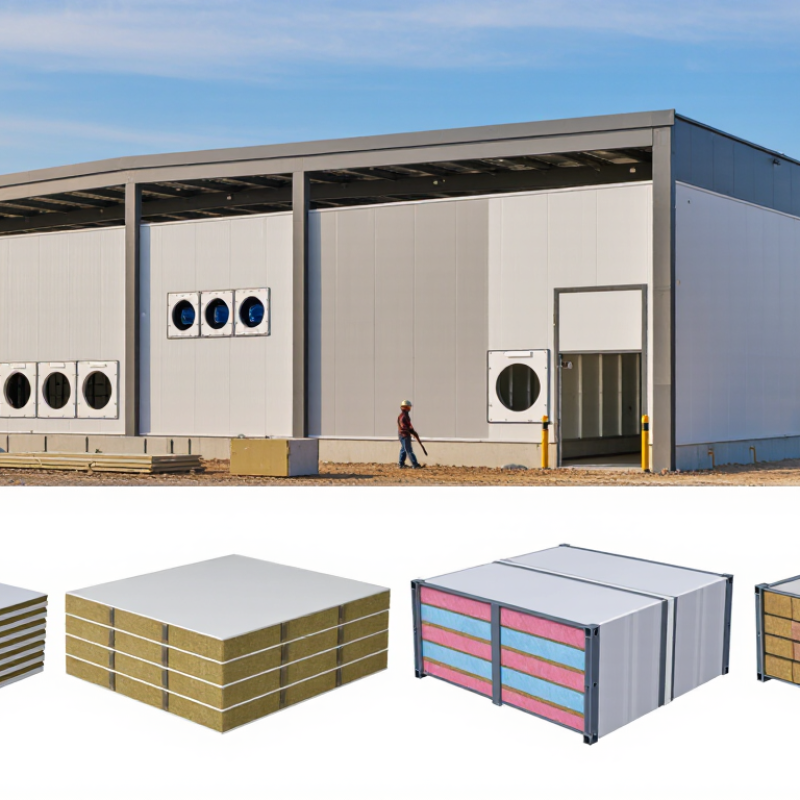
What Is a Color Coated Steel Sandwich Panel?
A color coated steel sandwich panel is a factory-made building element with two steel sheets surrounding an insulated core. The outer steel surfaces receive protective paint layers, while the core usually contains mineral wool, PIR, or EPS. This structure combines enclosure, thermal resistance, and rapid installation in one product.
The phrase “sandwich panel” sounds simple, but its performance depends on every layer. World Steel Association reported global crude steel production of about 1.88 billion tonnes in 2024, showing the material’s continuing industrial importance. Yet steel quantity alone says little about panel quality. Check the core density, adhesive coverage, joint design, coating thickness, and declared thermal conductivity. A panel may look rigid but still lose efficiency through poorly sealed joints.
Thermal performance deserves careful attention. UNEP and the Global Alliance for Buildings and Construction reported that buildings consumed 32% of global energy and produced 34% of energy-related carbon emissions in 2022. Therefore, choosing a panel only by price can create higher operating costs. Fire resistance also requires evidence, not assumptions. Mineral wool and PIR panels behave differently under heat, and local regulations may require tested assemblies under EN 14509 or equivalent standards. The weakest detail is often the fixing or edge joint. A thicker panel is not automatically better. Project climate, indoor humidity, span, loading, corrosion exposure, and maintenance access should guide the specification. Some selection decisions remain imperfect, especially when laboratory data does not match site workmanship.
Which Core Material Fits Your Building Requirements?
How to Choose Color Coated Steel Sandwich Panel in 2026?
Which Core Material Fits Your Building Requirements?
Core selection should follow the building’s real risks, not only its purchase price. The International Energy Agency reports that buildings consume about 30% of global final energy. It also links buildings to roughly 26% of energy-related emissions. A well-insulated panel can reduce heat transfer through walls and roofs. However, insulation performance changes with thickness, joints, moisture, and installation quality.
Mineral wool suits projects where fire resistance and acoustic control matter most. Its non-combustible structure can support safer compartment design, especially in warehouses, factories, and public buildings. PIR cores usually provide stronger thermal performance with less thickness. The U.S. Department of Energy identifies continuous insulation as an important method for reducing thermal bridging. That benefit can protect interior temperatures when steel framing creates cold paths.
EPS often offers a lower initial cost and simpler handling. Yet, it needs careful fire-risk assessment and detailed project specifications. Do not choose by thermal conductivity alone. Check reaction-to-fire classification, water absorption, compressive strength, service temperature, and panel joint design. Ask for tested data under recognized standards. Real sites are rarely perfect.
A small gap can matter.
In 2026, I would also review local climate data, energy targets, maintenance access, and expected building life. The cheapest core may become expensive after condensation, repairs, or higher cooling demand. A qualified engineer should verify the final assembly, because panel performance depends on the whole envelope, not the core alone.
How to Choose Color Coated Steel Sandwich Panel in 2026? – Which Core Material Fits Your Building Requirements?
Comparative guide to common core materials for color coated steel sandwich panels | Core material | Typical thermal conductivity λ
(W/m·K) | Typical density
(kg/m³) | Typical fire behavior* | Moisture resistance | Typical compressive strength
(kPa) | Best suited building requirements | Main limitations |
| Expanded polystyrene (EPS) | 0.034–0.040 | 15–25 | Combustible; commonly Euroclass E for the core unless the complete tested panel achieves a higher classification. | Low water absorption in suitable closed-cell grades, but joints and damaged facings must be protected. | 70–200 | Cost-sensitive warehouses, agricultural buildings, workshops, and general-purpose walls or roofs where fire requirements are moderate. | Lower fire resistance than mineral-wool systems; lower thermal performance per millimeter than PIR. |
| Extruded polystyrene (XPS) | 0.029–0.036 | 25–40 | Combustible; the final fire classification depends on the panel design, facings, joints, and tested assembly. | Very low water absorption and good resistance to intermittent damp conditions. | 150–700 | Areas requiring improved moisture resistance or higher compressive strength, such as colder, damp, or mechanically demanding applications. | Combustible core; less suitable where non-combustible construction is mandatory. |
| Polyurethane (PU/PUR) | 0.022–0.028 | 35–45 | Combustible; reaction-to-fire and fire-resistance performance must be verified for the complete tested panel system. | Closed-cell structure provides good resistance to water vapor and moisture when panel joints remain sealed. | 100–250 | Cold stores, temperature-controlled rooms, logistics buildings, and projects needing high insulation with relatively thin panels. | Fire performance is lower than non-combustible mineral-wool cores; thermal aging and joint detailing should be considered. |
| Polyisocyanurate (PIR) | 0.020–0.026 | 30–40 | Combustible core with improved fire behavior compared with standard PUR in many formulations; the complete panel test is decisive. | Good moisture resistance when the steel skins, sealants, and joints are correctly designed. | 100–250 | Energy-efficient industrial buildings, refrigerated facilities, commercial projects, and applications where reduced panel thickness is valuable. | Usually costs more than EPS; it does not provide the same non-combustible classification as mineral wool. |
| Rock mineral wool | 0.034–0.041 | 90–150 | Generally non-combustible; many mineral-wool products can achieve Euroclass A1, subject to product composition and system testing. | Non-hygroscopic fibers, but prolonged water exposure can reduce insulation performance; weatherproof detailing is essential. | 40–120 | Factories, public buildings, high-occupancy facilities, fire-compartment walls, and projects requiring strong fire and acoustic performance. | Heavier panels; usually require more structural handling and may need greater thickness for the same U-value as PIR. |
| Glass wool | 0.032–0.040 | 45–100 | Generally non-combustible; exact classification depends on binders, facings, and the complete panel assembly. | Fibers do not readily absorb water, but wetting can reduce thermal performance and must be prevented by proper sealing. | 20–80 | Light industrial buildings, offices, schools, and projects prioritizing fire safety, acoustic absorption, and moderate panel weight. | Lower compressive strength than most rigid foam cores; careful installation is required to avoid compression and gaps. |
Selection priorities for 2026: Choose the core by balancing required U-value, fire classification, moisture exposure, acoustic targets, structural loads, service temperature, panel thickness, life-cycle cost, and local building regulations. Thermal-conductivity and fire values are typical ranges; always verify the declared value and tested performance of the complete panel, including steel facings, joints, coatings, sealants, and support spacing.
How to Select the Right Coating, Thickness, and Dimensions
How to Choose Color Coated Steel Sandwich Panel in 2026?
Choosing a sandwich panel starts with its environment, not its color. A coastal building needs stronger corrosion resistance than an indoor partition. Check the coating system, galvanized layer, and stated coating thickness. Standard polyester may suit dry interiors, while silicone-modified or fluoropolymer coatings often perform better under strong sunlight and moisture. Ask for test data, not attractive samples alone.
Thickness must match the building’s thermal, structural, and acoustic requirements. A 50 mm panel may work for a mild warehouse, but a cold room usually needs a thicker core. Mineral wool and foam cores behave differently in fire, temperature control, and sound absorption. Confirm the declared thermal value at the expected service temperature. Small differences matter. Do not guess.
Measure twice. Panel width should fit the support spacing and installation method. Excessive length can create transport problems, especially on narrow sites. Check wind pressure, roof loading, joint design, and fastener placement with a qualified engineer. I have seen projects choose a thicker panel but overlook weak joints and poor drainage. That decision looked reasonable on paper, yet moisture entered through the connections. Request production drawings, coating records, and dimensional tolerances before approval. A physical sample can also reveal waviness, edge damage, or color variation that a specification sheet hides.
How to Choose Color Coated Steel Sandwich Panel in 2026?
Typical panel core thickness recommendations by application
For interior partitions, 50–75 mm panels are commonly sufficient. Exterior walls typically use 75–100 mm, while roofs and cold-room envelopes often require 100–150 mm or more to improve thermal performance. Common dry-film coating specifications include approximately 25–35 μm for polyester or PVDF systems and about 100–200 μm for plastisol systems. Final selection should be verified against local fire, structural, corrosion, U-value, and environmental requirements.
How to Check Quality, Standards, and Installation Compatibility
Choosing a color coated steel sandwich panel in 2026 requires more than comparing prices. Quality begins with the steel skin, coating thickness, core density, and panel geometry. Check whether the surface is even, without bubbles, scratches, or exposed edges. Measure the actual thickness with a caliper. Small errors can create visible gaps during installation.
Request current test reports for fire performance, thermal conductivity, water resistance, and coating durability. Standards vary by country and building type, so verify documents against local construction codes. Do not rely on a supplier’s general statement. The report should identify the tested panel structure, core material, thickness, and laboratory details. A missing test scope is a warning sign.
Installation compatibility deserves equal attention. Confirm panel length, joint design, fixing method, and roof slope before ordering. Check whether screws, washers, flashings, and sealants suit the coating and climate. On site, uneven supports often cause joint leakage, even when the panels are well made. That mistake is easy to underestimate. Leave suitable movement allowances for temperature changes, and protect cut edges from moisture. I would also inspect several random panels, not just the first one opened. Perfect samples can hide inconsistent production. A practical checklist helps, but it cannot replace careful site measurement.