Designated supplier of the world's top 500 smart houses

What Are Animatronic Dinosaurs and How Do They Work?

Animatronic Dinosaurs are robotic creatures designed to imitate the movement, appearance, and sounds of prehistoric animals. They appear in museums, educational parks, exhibitions, films, and themed attractions. Their realistic behavior comes from a combination of mechanical engineering, programmable electronics, and carefully shaped materials. The illusion starts here. A visitor may notice a blinking eye, a rising chest, or a slow tail movement before understanding the machinery underneath.

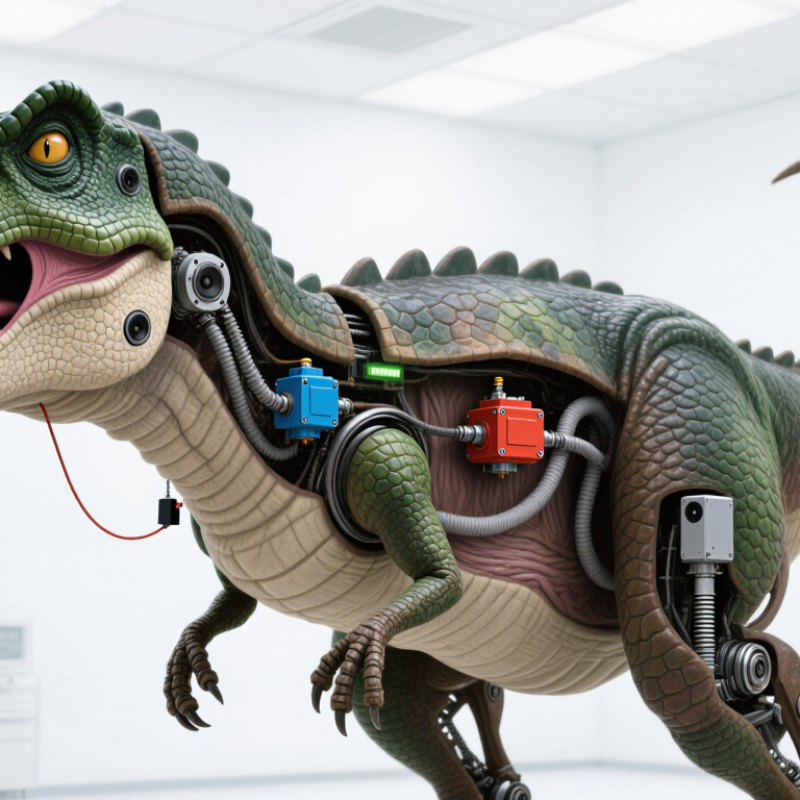
Inside the body, electric motors and servo systems control joints such as the neck, jaw, legs, and tail. Sensors can detect movement, sound, distance, or nearby visitors. A computer then sends instructions to the motors, valves, lights, and speakers. Some models use pneumatic systems for stronger or smoother motion. Designers often build the outer skin from silicone, foam, fiberglass, or flexible rubber. These materials help reproduce scales, wrinkles, muscle tension, and even subtle skin movement. A Tyrannosaurus may roar through hidden speakers while its jaw opens in timed stages. Each action must remain coordinated.

Creating convincing Animatronic Dinosaurs requires more than impressive hardware. Paleontological evidence guides body proportions, posture, and movement, although many details remain uncertain. Engineers must also test stability, noise levels, emergency stops, and visitor distance. No system is flawless. Motors can sound mechanical, and repeated motion may expose a predictable pattern. That imperfection deserves attention because realism depends on restraint, not only power. This article will explain how these machines are designed, controlled, animated, and maintained. It will also consider where scientific evidence ends and creative interpretation begins.

What Are Animatronic Dinosaurs and How Do They Work?

What Are Animatronic Dinosaurs and What Makes Them Different?

Animatronic dinosaurs are lifelike mechanical figures designed to imitate prehistoric animals. Unlike statues, they can move their heads, jaws, tails, and limbs. Their actions usually come from electric motors, pneumatic systems, or compact hydraulic parts. A programmed controller coordinates these movements.

What makes them different is their response and physical behavior. Sensors can detect nearby movement, sound, or changes in distance. The dinosaur may then blink, roar, turn its head, or shift its weight. Flexible skin, molded scales, glass eyes, and hidden frames improve the illusion. A well-built model should not only look realistic. Its movement must also match the animal’s anatomy.

In practical exhibits, technicians adjust timing, motor strength, and sound levels repeatedly. Small errors are easy to notice. A jaw that opens too quickly can look mechanical, while a tail moving too smoothly may seem unnatural. Maintenance is also essential because dust, moisture, and repeated motion wear down joints and coverings. These machines are not living animals, and their behavior depends on limited programming. That limitation matters. A convincing dinosaur still needs careful design, informed supervision, and regular testing to remain safe and believable.

The Mechanical Structure Behind an Animatronic Dinosaur

What Are Animatronic Dinosaurs and How Do They Work?

The Mechanical Structure Behind an Animatronic Dinosaur

An animatronic dinosaur is a life-sized machine designed to imitate prehistoric movement. Its body usually contains a metal frame, electric motors, control boards, and protective outer layers. The skeleton comes first. Engineers build it from steel or aluminum tubes, then connect each moving section with hinges or rotary joints.

Motion needs restraint. Motors drive the neck, jaw, tail, hips, and feet through gears, belts, or linear actuators. A control system sends timed signals to each motor. Sensors can monitor position, speed, and resistance. This helps prevent sudden movement when a joint reaches its limit. In a well-adjusted model, the jaw opens gradually while the head shifts slightly, creating a more natural feeding or warning gesture.

The outer skin often uses foam, flexible rubber, fiberglass, or layered fabric. These materials hide the machinery while allowing repeated movement. Small speakers may add breathing, footsteps, or vocal effects, although sound should not distract from mechanical accuracy. During inspection, technicians check loose bolts, cable tension, heat buildup, and unusual motor noise. Minor errors matter. A stiff ankle can make the entire dinosaur look unbalanced. No design is perfect, especially after months of outdoor use. Rain, dust, and temperature changes can affect joints and electronic connections, so regular maintenance remains essential.

How Motors and Control Systems Create Dinosaur Movements

What Are Animatronic Dinosaurs and How Do They Work?

Animatronic dinosaurs combine mechanical structures, electric motors, sensors, and programmed control systems. Their metal frames support lightweight skins, molded scales, and flexible joints. Motors turn gears, belts, or linkages inside the body. These parts move the neck, jaw, tail, legs, and sometimes the eyes.

A control unit sends timed signals to each motor. The system may open the jaw slowly, pause, and then create a sharper bite. Servo motors provide controlled rotation for smaller movements. Larger joints often need stronger actuators and reinforced bearings. Sensors can monitor position, pressure, and movement speed. This feedback helps prevent a neck from rotating too far or a foot from striking the ground too heavily.

Sound and motion must work together. A low rumble may begin as the dinosaur raises its chest. Its head can then shift toward a nearby sound source. In practical testing, technicians adjust movement curves one joint at a time. Small timing errors are easy to notice. The tail might stop too suddenly, or the eyes may turn before the head. That looks mechanical.

Perfect motion is not always the goal.

Real animals pause, wobble, and react unevenly. Designers sometimes add controlled delays and slight vibration to create more natural behavior. Still, every extra movement increases power use and maintenance needs. Dust, heat, and repeated stress can affect sensors and motor alignment. A reliable system therefore balances dramatic movement with safe operating limits.

How Sensors, Programming, and Sound Add Realism

Animatronic dinosaurs combine mechanical movement, sensors, programming, and sound to imitate living creatures. Inside the body, electric actuators move the neck, jaw, eyes, tail, and chest. A control system coordinates these actions through timed commands.

Sensors make the performance responsive. Infrared units can detect a visitor approaching, while pressure sensors may register movement near the feet. A sound sensor can trigger a head turn or sudden roar. In practical installations, technicians adjust detection distance carefully. Too much sensitivity creates awkward, repeated reactions.

Programming controls the creature’s rhythm. It links motion speed, pauses, lighting, and audio into one sequence. A slow blink before a jaw movement often feels more natural than constant activity. The illusion depends on delay. Real animals rarely move on perfect loops.

Sound carries much of the realism. Low-frequency rumbles can be felt through the floor, while layered breaths and throat vibrations make a roar less artificial. A 2023 TEA/AECOM Global Attractions Attendance Report recorded about 245 million visits across the world’s 25 most-attended theme parks. That scale increases demand for reliable, immersive attractions. Meanwhile, the International Federation of Robotics reported 541,302 industrial robots installed globally in 2023, showing how advanced motors and control systems are becoming more accessible.

Field experience reveals a limitation. Accurate movement cannot repair poor timing. A dinosaur with realistic skin may still look lifeless if its eyes move too late. Maintenance also matters: dust, heat, and loose cables can change performance. Designers must test these systems repeatedly, and some “realistic” choices still deserve reconsideration.

What Are Animatronic Dinosaurs and How Do They Work? — How Sensors, Programming, and Sound Add Realism
System or Data Dimension Typical Component or Method Representative Technical Data How It Adds Realism
Structural Frame Steel or aluminum internal skeleton with articulated joints Designed around load, balance, joint travel, and the weight of the outer skin; large moving sections commonly require mechanical stops and safety supports. Provides stable weight transfer and allows the head, neck, tail, jaw, and limbs to move as connected body parts rather than as separate props.
Actuators Electric servomotors, linear actuators, or pneumatic cylinders Electric servo systems commonly use closed-loop position feedback. Pneumatic systems can produce high force and smooth motion but require compressed air and control valves. Controls precise movements such as blinking, jaw opening, breathing, head rotation, and tail motion.
Position Feedback Encoders, potentiometers, or limit switches Feedback devices report joint position or travel limits to the controller. Limit switches are often used as a secondary over-travel protection method. Prevents movements from exceeding safe mechanical limits and helps the dinosaur return to repeatable starting positions.
Human Detection Passive infrared (PIR), ultrasonic, infrared, or time-of-flight sensors PIR sensors detect changes in infrared radiation from warm moving objects. Common ultrasonic modules measure distance by timing reflected sound waves and often operate over ranges of a few centimeters to several meters. Triggers behaviors when a visitor approaches, moves away, or enters a defined viewing area.
Vision and Tracking Camera-based motion detection or depth sensing Image systems can identify movement, body position, or a person’s location. Performance depends on lighting, camera angle, processing speed, and the detection algorithm. Allows the head, eyes, or body to appear to follow a visitor instead of performing the same motion for everyone.
Audio Input Microphone or sound-level sensor Human-audible sound is generally described as approximately 20 Hz to 20 kHz, although practical microphones and loudspeakers use narrower ranges. Can make the dinosaur react to clapping, speech, footsteps, or sudden environmental sounds.
Control Logic Embedded controller, programmable logic controller, or industrial computer Programs combine sensor states, timers, motion profiles, safety rules, and audio cues. A control loop may update outputs many times per second to maintain smooth motion. Coordinates multiple body parts so that eye movement, jaw motion, posture, sound, and breathing appear synchronized.
Motion Programming Keyframes, interpolation, state machines, and timed sequences Keyframes define target positions at selected times; interpolation creates transitions between them. State machines can separate behaviors such as idle, alert, display, and emergency stop. Creates varied behavior and avoids abrupt robotic starts, stops, and repeated gestures.
Motion Speed Programmed acceleration, velocity, and deceleration limits Speed is limited according to actuator capability, joint load, visitor distance, and mechanical safety requirements. Smooth acceleration reduces shocks and vibration. Makes heavy movements feel physically believable and reduces the risk of sudden or unsafe motion.
Jaw and Facial Motion Servo-driven jaw, eyelids, eyes, nostrils, and neck mechanisms Several low-speed actuators may operate independently or in coordinated groups. Small timing differences between facial movements can be deliberately programmed. Combines blinking, eye direction, jaw movement, and head posture to create the impression of attention and expression.
Breathing Effect Repeated torso movement, air bladder, or concealed linear actuator Breathing is typically modeled as a slow repeating cycle with changing timing and amplitude rather than a perfectly constant loop. Adds subtle continuous motion while the dinosaur is idle, preventing a motionless appearance.
Sound Playback Digital audio files, amplifier, and loudspeaker system Playback may use sampled roars, calls, footsteps, or environmental sounds. Volume and equalization are adjusted for the enclosure and listening distance. Sound reinforces the apparent size, location, mood, and physical action of the dinosaur.
Audio Synchronization Event-based triggers linked to motion timelines Audio events can be started at defined points in a movement sequence, such as jaw opening, head lifting, or foot contact. Matching sound timing with visible action makes the behavior feel more convincing than playing audio independently.
Outer Skin Flexible foam, silicone, rubber, fabric, fiberglass, or layered composite materials Flexible coverings are shaped to preserve joint clearance and may include texture, scales, wrinkles, paint, and embedded details. Conceals the mechanisms and adds realistic surface deformation, skin folds, color variation, and tactile depth.
Lighting Low-voltage LEDs for eyes, mouth, or environmental effects Brightness and color can be controlled by the same event system used for motion and sound. Supports eye focus, alert states, mouth illumination, and dramatic changes in perceived mood.
Power System AC supply, regulated DC power, batteries, and separate actuator circuits Motors and amplifiers can create electrical noise and short-duration current demand; protection commonly includes fuses, circuit breakers, grounding, and emergency isolation. Stable power helps prevent stuttering movement, audio distortion, controller resets, and inconsistent performance.
Safety Controls Emergency-stop button, motion limits, current monitoring, and guarded moving areas Safety systems are designed to remove or reduce actuator power quickly and to detect conditions such as over-travel, overload, or abnormal current. Allows dramatic movement while reducing hazards to operators, visitors, the mechanism, and the surrounding structure.
Behavior Variation Randomized timing, multiple animation clips, and sensor-driven branching Small controlled variations can be applied to idle duration, head angle, blink timing, sound selection, and movement amplitude. Prevents repetitive loops and makes the dinosaur seem responsive rather than mechanically predictable.
Calibration and Testing Joint homing, sensor alignment, sound checks, and staged motion tests Calibration establishes reference positions and verifies sensor readings before normal operation. Testing is usually performed at low speed before full-range motion is enabled. Maintains consistent posture, accurate reactions, synchronized effects, and safer long-term operation.
Note: Technical values are representative engineering ranges and practices; the exact specifications depend on the dinosaur’s size, movement requirements, environment, and safety design.

Where Animatronic Dinosaurs Are Used and How They Are Maintained

What Are Animatronic Dinosaurs and How Do They Work?

Animatronic dinosaurs appear in science museums, educational centers, indoor attractions, exhibitions, and film production spaces. They combine electric motors, pneumatic components, sensors, controllers, and molded outer skins. In museums, a dinosaur may turn its head when visitors approach, then pause to protect its mechanism. Outdoor displays need sealed joints, covered wiring, and stable foundations. Rain is unforgiving. Technicians also adjust movement speed for children, narrow walkways, and crowded viewing areas. A realistic roar needs careful volume control, not simply a louder speaker.

Reliable maintenance begins with a visual inspection before opening hours. Staff check loose skin panels, exposed cables, unusual sounds, and delayed movements. Technicians inspect actuators, air lines, bolts, sensors, and emergency stop controls according to the service schedule. Dust can restrict joints, while humidity may damage electrical connections. In busy venues, operators often record each fault, repair, and replacement part. These records reveal repeated problems and guide better planning. A small hesitation during movement should not be ignored. It may indicate friction, a weak sensor, or software trouble. Perfect performance is not always realistic, especially after years of public use. Still, rushed repairs create new risks. Careful testing should follow every adjustment, with the dinosaur observed through several complete movement cycles. A quiet maintenance room, clean tools, and patient technicians often matter as much as advanced equipment.

  • Wechat